Tuesday, 17 September 2024

Beatles, Bangladesh and a sitar maestro

[Bangladesh is once again in the news for all the wrong reasons, after a student protest snowballed into protest against the Prime Minister Sheikh Hasina's one and a half decade long overbearing rule and forced her to flee. On this occasion the plight of Bangladesh reminds me of the article I wrote in Asian Age when we mourned the passing of Pandit Ravi Shankar in 2012 as it is relevant now.]

R Hariharan  

Courtesy: Asian Age, December 26, 2012
Even as the nation mourned Sitar maestro Pandit Ravi Shankar’s death, and the Indian army observed  ‘Vijay Divas’ on December 16 – the day of victory in Bangladesh, many may not be aware of the maestro’s contribution the cause of Bangladesh freedom struggle in 1971.

Although the Awami League led by Sheikh Mujibur Rahman won 167-seat majority in the 313-member house in 1970 Pakistan elections, President General Yahya Khan was reluctant to allow him to become the Prime Minister for his views on autonomy for the eastern wing. When the political deadlock continued, Mujib decided to take the issue to the people.

On March 7, 1971 Mujib at a public meeting in Dacca called for an independence struggle. His memorable words "The struggle now is the struggle for our emancipation; the struggle now is the struggle for our independence. Joy Bangla!..” triggered a massive disobedience movement in the East.

Yahya Khan declared Martial Law, banned the Awami League and arrested hundreds of protest. On the night of March 25, 1971 Mujib was arrested and air lifted to West Pakistan. Awami League’s key leaders fled to exile in India. The army started disarming Bengali troops and paramilitary forces stationed. However, Major Ziaur Rahman belonging to East Bengal Regiment in Chittagong took over the battalion and declared independence of Bangladesh on behalf of Mujib. Other East Bengal regiments and paramilitary forces also rebelled and the troops fled to India to swell the ranks of the Mukti Bahini (Liberation Force) being formed by the Awami League leaders in exile.

I remember, on a pleasant March morning debriefing Zia’s Punjabi commanding officer who had crossed the border at Agartala to seek our protection! Even under such adverse circumstances, he had only contempt for ‘low grade’ Bengali troops. This reflected the superior attitude of the Punjabi-dominated army elite generally had towards Bengali which failed to gauge the real power of Bengali nationalism that led to the creation of Bangladesh. 

It was the darkest chapter in Pakistan army’s history when under General Tikka Khan’s leadership army committed terrible atrocities. Hussain Haqqani in his book ‘Pakistan between the mosque and the army’ has described the scene in the words of General Niazi (who succeeded Tikka Khan):  “On the night between 25/26 March 1971 General Tikka struck. Peaceful night was turned into a time of wailing, crying and burning. General Tikka let loose everything at his disposal as if raiding an enemy, not dealing with his own misguided and misled people. The military action was a display of stark cruelty more merciless than the massacres at Bukhara and Baghdad by Chengiz Khan and Halaku Khan... His orders to his troops were: ‘I want the land and not the people…” 

The army was assisted by Razakars, a right wing Islamist militia formed targeting Bengali professionals and Hindus in particular. Millions of people mostly Hindus and the Awami League followers fled the country to seek refuge in Indian border states. When their number swelled to ten million it became a huge burden on India.  However, the U.S. conditioned by Cold War perceptions supported the Pak military crackdown. Western powers and media also took little notice of refugees’ plight. Indian Prime Minister Mrs Indira Gandhi’s plea for help was in vain.

Pandit Ravi Shankar, a friend of George Harrison of Beatles fame since 1966, was moved by the suffering of millions of refugees. At his request George Harrison organised a charity Concert for Bangladesh in August 1971 in which Ravi Shankar also participated. The concert album became one of the best sellers, and figured in the top-10 in the U.K and three other European countries.  And it won Ravi Shankar his second Grammy Award.

George Harrison’s lyric opens with a reference to Ravi Shankar’s request to him for support:
 My friend came to me with sadness in his eyes
Told me that he wanted help before his country dies
Although I couldn't feel the pain, I knew I had to try
Now I'm asking all of you to help us save some lives.

The lyrics further made ‘Bangla Desh’ a household one in the West. It went like this:
Bangla Desh, Bangla Desh
Where so many people are dying fast
And it sure looks like a mess
I've never seen such distress
Now won't you lend your had, try to understand
Relieve the people of Bangla Desh

Its closing part brought the humanitarian plight nearer home to the Western audience:
Bangla Desh, Bangla Desh
Now, it may seem so far from where we all are
It's something we can't reject
That suffering, I can't neglect
Now won't you give some bread to get the starving fed
We've got to relieve Bangla Desh
Relieve the people of Bangla Desh.

To many of us who fought in Bangladesh appalled by the Western indifference, George Harrison’s Bangladesh was refreshing.  Did the song have any political impact? I got my answer on the Christmas night in 1971 when I shared eggnog with the U.S. consul who lived next door in Dhanmondi in Dacca. He spoke how he was personally moved by George Harrison’s lyrics. He also added  the U.S embassy in Dacca had repeatedly requested for U.S. action against the genocide.  

Thursday, 5 September 2024

Strategic Dynamics of India-Sri Lanka relations


Col R Hariharan (Retd)

World Focus, September 2024 issue | https://www.worldfocus.in/current_issue?key=492&val=India-and-Neighbourhood

Changes in strategic backdrop

There is a seamless link between trade and war. In the words of American scholar of international economy Robert Gilpin, “trade is the oldest and most important economic nexus among nations. Indeed, trade along with war has been central to the evolution of international relations.”

Peninsular India is separated from Sri Lanka by 40 km of Palk Strait. Sri Lanka’s location astride the international sea lanes of the Indian Ocean gives it a pivotal role of strategic importanceu not only for India, but for global security and trade as well.

Indian Navy’s domination of the IOR is being challenged by the increasing presence of PLA Navy’s warships. China has also increased its strategic reach in IOR by creating maritime assets and facilities in Indian Ocean rim countries. In the East, Kyakpyu port in Myanmar and Chittagong port developed by China in Bangladesh provide direct access from the mainland to the Bay of Bengal. China has a 99-year lease on Sri Lanka’s Hambantota port that dominates the sea lanes of the Indian Ocean. A Chinese company controls two carrier terminals in Colombo port. China also exercises control over the reclaimed land in Colombo port economic zone. In the West, China has shown interest in developing infrastructure in Ilhavanddhippolhu atoll in Maldives, strategically located on the sea lanes of the Indian Ocean. China has gained a foothold near the Strait of Hormuz after developing a deep sea port in Gwadar in Pakistan as a part of the CPEC. Since 2017, China has established its first overseas military base in Djibouti in the Horn of Africa.  

Alarmed at the increasing threat posed by China to international maritime traffic in the Indo-Pacific, four nations – India, the US, Japan and Australia - have formed the ‘Quad’, a quadrilateral non-military framework. It is ushering in close cooperation between the members in manufacturing, logistics and political issues. The AUKUS – Australia-US – military alliance is poised to introduce the nuclear triad in the Indo-Pacific theatre. A trilateral alliance of the US-Japan-South Korea has been formed to tackle any threat from China and its protégé North Korea, flaunting their military strength in their vicinity.

China’s visible presence has made India’s ‘Neighbourhood First’ policy more relevant not only to India’s national security, but also its trade and commerce. Conscious of this, PM Modi revamped maritime cooperation doctrine with the launch of the SAGAR (Security and Growth for All in the Region) initiative March 12, 2015, to build better relations with island nations of IOR - Sri Lanka, Maldives, Mauritius, and Seychelles.  

Impact of Covid 19 pandemic

The Covid-19 pandemic between 2020 to 2022 caused a huge set back to the economies of South Asian countries. Sri Lanka was one of the most affected by the Covid pandemic. The economy, largely dependent upon remittances from the Diaspora and tourism industry, suffered heavily. The Ukraine war and the slapping of stringent sanctions against Russia affected it further as tourists from the two countries formed around 15 percent of international tourist travellers. By March 2022, the country saw 10-hour power shutdowns almost every day, endless ques waited for hours for petrol at pumps. Surgical operations were halted due to lack of medical supplies. Newsprint shortage forced daily newspapers to go online mode; public exams in schools were cancelled for want of paper. Adding to the woes, hydropower generation dipped as water sources dried up and annual agriculture production fell by 40 percent due to President Gotabaya Rajapaksa’s ill-timed ban on import of chemical fertilizers and pesticides.

The country went bankrupt in April 2022. Sri Lankan rupee was devalued by 36 percent, pushing up the prices of daily necessities. In a bid to save foreign exchange, authorities banned imports including fruits, vegetables and milk powder.  The essential items ran out of stock in stores adding to the agony of the public.  The public suffering from prolonged shortages and high prices gathered in mass protests demanding the resignation of Rajapaksas in power as president and prime minister. By July 9, 2022 it snowballed into Aragalaya, a national movement spearheaded by university students. When ruling party goons and troops tried to suppress the protests, irate mobs ransacked the houses of President Gotabaya and Prime Minister Ranil Wickremesinghe. The Aragalaya protests forced President Gotabaya to flee the country. Some semblance of order was restored when the parliament installed Ranil Wickremesinghe as interim president.

India-Sri Lanka vision document

India played a crucial role in supporting Sri Lanka during the economic crisis and recovery thereafter. India provided over $4 billion in financial aid during its financial crisis. The aid included credit lines for essential imports of food, medicines and fuel. India was the first bilateral creditor to offer financing assurances to the International Monetary Fund (IMF), which paved the way for other creditors to follow suit. This enabled Sri Lanka to meet the conditions for formalising the IMF programme for financial assistance. India also participated in debt restructuring agreements along with other countries i.e., China, France and Japan. These agreements allowed Sri Lanka to restructure its debt on more favourable terms.

India and Sri Lanka formalised their economic partnership after detailed discussion during President Wickremesinghe’s visit to New Delhi on July 21, 2023. President Wickremesinghe specially appreciated India’s timely, unprecedented, and crucial support to Sri Lanka and its people. India and Sri Lanka agreed upon an economic partnership vision to speed up Sri Lanka’s economic recovery. The vision document’s title “Promoting Connectivity, Catalysing Prosperity: India-Sri Lanka Economic Partnership Vision” contains the key elements of the partnership. The plan is to strengthen the maritime, air, energy and people-to-people connectivity between the two countries. They have signed six energy agreements, including an oil pipeline from India to Sri Lanka, electricity grid connectivity and cooperation on renewable energy.

India’s decision to allow the use of Indian rupee for trade settlement between the two countries and allowing the use of UPI based digital payment system is likely to boost trade and tourism. Already there are signs of improvement in Indian tourist arrivals in Sri Lanka and we can expect it to grow exponentially when ferry services and air connectivity are beefed up.

With South India becoming an industrial and IT hub, a multipurpose infrastructure link with Sri Lanka would bring a sea change in economic growth of the island nation. With Tamil Nadu becoming the heartland of automobile industry and IT manufacture, such a link would particularly benefit the Northern and Eastern provinces.

Contentious issues

A land bridge connecting India and Sri Lanka across the Palk Strait is one of the ideas mooted in the  joint vision statement. It is not a new idea; the then PM Ranil Wickremesinghe had proposed it in 2004. The proposal for a 23 km long Palk Strait Bridge met with intense opposition in Sri Lanka. Tamil Nadu Chief Minister Ms Jayalalithaa was also opposed to the idea on security considerations. In 2015, India’s transport minister Nitin Gadkari proposed to build the ‘Hanuman bridge’ with the aid of the Asian Development Bank as a part of the Trans Asian road network. However, it was shot down by Sri Lanka Minister for highways Lakshman Kiriella. He said “We are against it because people of Sri Lanka are opposed to it. We cannot let India build a bridge.” As Sri Lanka had joined the BRI just then; apparently Sri Lanka did not want to upset China. Moreover, India’s domination of Sri Lankan life is resented by sections of people in all political parties.

It will not be easy for President Wickremesinghe to politically sell the idea of a land bridge with India, particularly when he is contesting the presidential election in September 2024. The attitude of Sri Lanka Podujana Peramuna (SLPP) with its strong Sinhala nationalist moorings and the Janatha Vimukthi Peramuna (JVP) and its cohorts is no better. The land bridge proposal can be used by them to whip up anti-India rhetoric. Even a non- political personality like Colombo Archbishop Malcom Cardinal Ranjith had opposed the land bridge proposal from the pulpit. 

The India-Sri Lanka vision document also speaks of two other issues that are contentious. The first is on encouraging Indian investments in the divestment of Sri Lankan State-owned Enterprises (SOE). This sale of SOE is already mired in political controversy. The Economic and Technology Cooperation Agreement (ETCA) proposal to comprehensively enhance bilateral trade and investments has already become a politically sensitive issue. Some stakeholders like domestic businesses in Sri Lanka fear increased competition from India can put them out of business. There are differences in regulatory frameworks and standards between the two countries. Harmonizing them will require full cooperation and effort. There is public opposition from professional bodies and trade unions in Sri Lanka who worry about the influx of professionals from India reducing their opportunities for employment. Similarly, some fear the huge economic disparity between the “big brother” India and Sri Lanka could lead to Indian domination of certain sectors gaining unequal benefits.

Adequate infrastructure and connectivity are essential for smooth implementation of ETCA. Both countries need to invest to improve logistics, transportation, digital trade and services for people to see the advantages of economic technical connectivity. Similarly, the two countries should invest in building trust through people to people connectivity at various levels particularly through increased links with academic institutions, professional bodies and civil society organisations in both countries.

Despite these challenges, both India and Sri Lanka seem to recognize the potential benefits of ETCA and continue to work towards it. After all, the India-Sri Lanka Free Trade Agreement (FTA) has been quite successful in enhancing economic ties between the two countries.

Bilateral trade has grown from $658 million in 2000, when the FTA was signed, to $5.45 billion in 2021 before Covid-19 pandemic queered the pitch of growth. Sri Lanka benefited considerably from the FTA with more than 60 percent of its exports to India utilizing the provisions of the agreement. This enabled Sri Lankan products to enter the Indian market with zero tariff. As against this, only 5 percent of India’s exports to Sri Lanka used FTA provisions. India is one of the largest investors, exceeding $2.2 billion in 2021. India has been the largest source of tourists to Sri Lanka further strengthening the island nation's economy. Overall, the ISFTA has played a crucial role in deepening the economic and commercial partnership between India and Sri Lanka, benefiting both nations in various sectors.

Col R Hariharan VSM, a retired MI specialist on South Asia and terrorism, served as the head of intelligence of the Indian Peace Keeping Force in Sri Lanka 1987-90. He is associated with the Chennai Centre for China Studies. Email: haridirect@gmail.com Website: https://col.hariharan.info


Tuesday, 3 September 2024

Sri Lanka: Options among three dozen plus presidential aspirants


Col R Hariharan

Sri Lanka Perspectives August 2024 | South Asia Security Trends, September 2024 | https://www.security-risks.com

Thirty-nine candidates filed their nominations for the presidential elections to be held on September 21. However, the number of candidates stands reduced with the passing of one of the nominees Mohammed Ilyas, aged 78, on August 22 after brief illness. There is no woman candidate, though Sri Lanka boasts of electing Mrs Sirimavo Bandaranaike as the world’s first female prime minister as early as 1960.

Among the 38 aspirants, 22 are from recognized political parties, while 16 are contesting as independents. Some of the candidates are veterans of many presidential elections in the past. Apparently, they are in the fray perhaps to split local votes, while enjoying the perks and publicity of contesting the presidential poll. In any case, all major political parties – the ruling Sri Lanka Podujana Peramuna (SLPP), Sri Lanka Freedom Party (SLFP), the United National Party (UNP) and its clone Samagi Jana Balawegaya (SJB) - are split over supporting interim President Ranil Wickremesinghe, contesting as an independent. This is reflected in the support groups of the contestants.   

The real contest is between three men: Ranil Wickremesinghe, Sajith Premadasa, leader of the opposition SJB and Anura Kumara Dissanayake representing the Janatha Vimukthi Peramuna (JVP) led National Peoples Power (NPP) combine. Namal Rajapaksa, the scion of the Rajapaksas, is in as an afterthought when Dhammika Perera, billionaire businessman and former minister of investment promotion, declined to contest on SLPP ticket.

The other well-known names in the fray are Field Marshal Sarath Fonseka (independent) who led the Sri Lanka army to victory against the Tamil Tigers and Wijeyadasa Rajapakshe, seasoned politician of SLPP, representing National Democratic Front, a combine of minor parties. Aragalaya activist Nuwan Bopage is endorsed by the Frontline Socialist Party, formed by dissidents of JVP.

Internal wranglings among Tamil parties have split their strength after the largest Tamil party - the Ilankai Tamil Arasu Katchi (ITAK) - skewed its political narrative. Now, Ariyanethiran, former ITAK MP, has filed his nomination as an independent candidate, endorsed by the EPRLF, PLOTE, TELO and Tamil Peoples Alliance. ITAK MP Sumanthiran aptly summed up the impact of this mindless move in his X message: “If the Tamils vote in large numbers for Ariyanethiran, the course of Tamil politics will take a more extremist turn. If they do not vote so, the Tamil nationalist cause will be weakened. Whatever the result, the ultimate losers will be Tamils.”

Muslim politicians are on the backfoot, particularly after the Easter Sunday terrorist attacks. Both Sri Lanka Muslim Congress (SLMC) and Bathiudeen-led All Ceylon Makkal Congress (ACMC) are supporting SJB. They had no other option, after the Rajapaksas patronised anti-Muslim fringe elements of Buddhist clergy.

The Institute for Health Policy (IHP)’s Sri Lanka Opinion Tracker Survey (SLOTS) provisional estimates of presidential election voting intent for July 2024 showed that Dissanayake and Premadasa leading neck and neck (37 percent and 36 percent respectively each within the margin of error) but with both at less than 40 percent of all adults. IHP also said July saw a continuing surge for President Ranil Wickremesinghe, whose support grew to 23 percent. At the time of the survey, the SLPP had not declared Namal Rajapaksa as its candidate. However, support for a generic SLPP candidate remained unchanged at 4 percent.

Manifestos galore

Dissanayake: Opinion polls always do not translate into votes; we have seen it in India and in Sri Lanka. However, both Premadasa and Dissanayake are attracting huge crowds in election rallies. Dissanayake’s past record as a minister was not memorable; he had fared poorly in the last presidential election. So, his lead in the opinion poll is apparently driven by youth, who had rallied together during Aragalaya protests. However, Dissanayake has been bending over backwards to refurbish his image. His 233-page long election manifesto’s title “A Prosperous Nation, A Beautiful Life” is aspirational, trying to cash in the systemic collapse the country had faced. According to him, the manifesto was developed through extensive discussions and analysis with stakeholders across 39 sectors and industries over the past two years. It outlines a summary of its plans for the development of various sectors, including engineering, IT, the economy, social issues, education, and health.

Premadasa: Sajith Premadasa’s SJB manifesto focuses on the well-trodden path of refining existing systems. The manifesto titled ‘A win for all’ consists of 5 pillars, including, building a resilient economy, empowering every citizen, enhancing Government service, protecting quality of living and safeguarding the nation. Dr Harsha de Silva outlined the party’s 10-point comprehensive plan to steer Sri Lanka towards sustainable economic growth, centred on transparency, accountability and inclusive development. He asserted the party’s “model is a synthesis of economic freedom, the belief in markets and economic justice, the belief in equity and everybody gets a piece of the pie.” SJB promises to create an independent public prosecutor to eliminate conflicts of interest in corruption cases involving the Attorney General’s office. The Party’s plan also includes introducing public procurement laws, e-procurement platforms, asset recovery regulations and enhancing transparency in public financial management. On economic stabilisation it outlined measures to manage the debt crisis, continue negotiations and engage with the IMF to amend certain terms while maintaining debt sustainability.

Wickremesinghe: Despite low ratings, President Wickremesinghe is banking on his performance as Interim President. He has been listing his achievements in the economic turnaround after the country was declared bankrupt. In Phase I he focused on addressing the immediate foreign exchange crisis, which helped reduce fuel queues, improve the availability of essential items, shorten power cuts and resume food production. To prevent major food crises cash transfers were made to vulnerable communities. In Phase II, the root causes of macroeconomic vulnerabilities were addressed to stabilize the economy. Comprehensive reforms in fiscal and monetary policies, State-owned enterprises (SOEs) and the financial sector. This enabled the country to move from a primary budget deficit of 5.7% of GDP in 2021 to a surplus of 0.6% in 2023. Inflation has also dropped significantly and key economic indicators such as foreign reserves and the exchange rate have shown marked improvement. It came at the cost of severe  austerity measures and hike in taxation rates, increasing the burden on the common man. Conscious of this, Wickremesinghe is taking up with the IMF a proposal to raise the income tax band from Rs 500,000 to Rs 720,000. However, there were glaring aberrations of corruption and misgovernance under his watch. Despite this, as a suave dealmaker, Wickremesinghe has been able to attract support across all the national parties including and some of the minor parties.

Namal: SLPP candidate Namal Rajapaksa is banking on an economic vision aimed at doubling the economy from $ 90 billion to $ 180 billion within a decade. He has emphasised a two-part strategy focusing on immediate relief package and a sustainable integrated growth plan built on the foundational principles of “Mahinda Chinthanaya”. How he proposes to do it in a decade when his family has ruined the economy is a matter of fantasy!

India watch

NSA’s visit: Ajith Doval, India’s National Security Advisor, visited Colombo to sign a Memorandum of Understanding (MoU) with member states of the Colombo Security Conclave (CSC) and the Charter for the Establishment of the CSC Secretariat in Colombo on August 30. Apart from India, Mauritius, Maldives and Sri Lanka are members of CSC. He had official talks with President Ranil Wickremesinghe and Prime Minister Dinesh Gunawardena. He also met with leading presidential candidates including Sajith Premadasa of SJB and Anura Kumara Dissanayake of NPP. The NSA also met representatives of various political parties, including Tamil leaders from the North, East, and Upcountry. He is reported to have told them not to “waste the votes of the Tamil people” [by voting to common Tamil candidate] and try to negotiate with a candidate who could win and secure the aspirations of the Tamil people through talks. The NSA’s visit showed India’s keen interest in the presidential poll in Sri Lanka.

Indian and Chinese naval ships in Colombo: The Colombo Port saw warships of India and China making a port call on the same day – August 26. India’s guided missile destroyer INS Mumbai made the first port call. The Indian warship was bringing spares for the Dornier maritime patrol aircraft used by the Sri Lanka Navy. It was the eighth Indian warship to visit Sri Lanka this year. Hours later, three PLA-N warships— guided missile destroyer Hefei and amphibious dock landing ships Wuzhishan and Qilianshan — also reached the port. The Chinese warships were visiting Colombo for three-day resupply after completing Peace-Unity 2024 joint exercises with Tanzania and Mozambique, according to Chinese media. The warships of the two nations successfully conducted a Passage Exercise (PASSEX) with SLNS Vijayabahu separately on August 29.

End note

It should not be forgotten that the presidential elections are held in the backdrop of IMF-proposed austerity measures which has imposed subsidy cuts and heavy taxation. Steep increase in prices have reduced the disposable income of most of the people. Jean Jacque Rousseau said “Those that are slow in making a promise are the most faithful in performance of it.” This applies to current situation when Premadasa and Dissanayake are making promises to remove systemic aberrations. While Wickremesinghe is riding his success in triggering the economic recovery, Premadasa is harping on his father Ranasinghe Premadasa’s performance as a President to improve the system. On the other hand, Dissanayake wants a radical systemic change. So ultimately the voter has two alternatives to choose: Between Wickremesinghe, the Deal maker, and Premadasa, the Lotos eater, who can improve the existing system for complete economic recovery? Or, trust Dissanayake to introduce a new socialist system to take the country to complete economic recovery.

[Col R Hariharan VSM, a retired MI specialist on South Asia and terrorism, served as the head of intelligence of the Indian Peace Keeping Force in Sri Lanka 1987-90. He is associated with the Chennai Centre for China Studies. Email: haridirect@gmail.com, Website: https://col.hariharan.info


Sunday, 4 August 2024

Sri Lanka’s Quest for a Man for All Season


Col R Hariharan


Sri Lanka Perspectives July 2024 | South Asia Security Trends, August 2024 | https://www.security-risks.com

Presidential aspirants

Sri Lanka people will be voting to elect their next President on September 21. The Election Commission’s announcement on the election sets to rest all the speculation about political moves to postpone it.

The month ended with six presidential aspirants in the fray. According to the Election Commission of Sri Lanka (ECS) six candidates who deposited the money required to contest the presidential election included two independents and four representing political parties or formations. President Ranil Wickremesinghe and former MP Sarath Keerthirathne are contesting as independents. The four candidates representing political parties/groupings – opposition leader Sajith Premadasa (Samagi Jana Balawegaya -SJB), social activist Oshala Herath (New Independent Front), ASP Liyanage (Sri Lanka Labour Party) and PWSK Bandaranayake (Jathika Sanwardhana Peramuna).

AK Dissanayake (a.k.a AKD), the leftist leader of the National Peoples Power (NPP)- JVP combine, is likely to file his nomination in the next few days.

In addition, Field Marshal Sarath Fonseka, who led the Sri Lanka army as Army Commander to victory against the LTTE, has also announced that he would contest the presidential election. “For 76 years, we have been led by an inept political group that has led us to bankruptcy,” he said, adding that for Sri Lanka to grow, “we need to crush corruption”. He had earlier indicated he would be contesting as an independent. The FM had contested the 2010 presidential election as a common opposition candidate and lost against Mahinda Rajapaksa

Another likely candidate is Sri Lanka’s Justice Minister Wijeyedasa Rajapakshe, who has resigned from his position to contest the presidential election.

The real fight will be between Ranil Wickremesinghe, Sajith Premadasa (SJB) and AKD (NPP) as other candidates are light weights, useful to split votes of the major parties. FM Fonseka might end up as the fourth candidate of reckoning, in case he is able find support from other smaller parties. The picture is likely to be clear in the next two weeks.

RW in action

President Wickremesinghe had the early mover’s advantage when he announced his intention to contest the election last month. He was in an eye-ball to eye-ball contact with Mahinda Rajapaksa to gain the support of the ruling Sri Lanka Podujana Peramuna (SLPP). He wrote a letter to all parties including the SLPP saying “Whilst I have decided to be an independent candidate at the 2024 presidential election, I am seeking the support of a majority of the political parties. To ensure my victory, while I expect the support of the Sri Lanka Podujana Peramuna, I await an early response from your party.” The Rajapaksas were probably irked by the tone of his letter treating SLPP on par with other parties.

Already, Wickremesinghe was able to win over the influential section of SLPP to form a broader alliance led by Premier Dinesh Gunawardena and the support of many SLPP ministers and 92 parliamentarians. In spite of this, the SLPP politburo announced it will not be supporting Ranil Wickremesinghe’s candidature and it will field its own candidate. The Rajapaksa heir apparent and national organiser of the party Namal Rajapaksa had been vehemently opposed to supporting Wickremesinghe based on “principles.” He pointedly said the President was free to seek the support of SJB and other parties. The founder of the SLPP Basil Rajapaks was also lukewarm in supporting Wickremesinghe.

The Rajpaksas and the SLPP had propped up Wickremesinghe as an interim president, though he had no support in parliament, to handle the pressure of Aragalaya protests and the national economy collapsed. During his rule, the Party grudgingly supported the stringent measures for economic recovery to conform to IMF conditions. Despite that, why did the Rajapaksas choose not to support Wickremesinghe? The incumbent president had not been faring high in opinion polls; but that may not be the reason because the SLPP is faring no better. The Rajapaksas probably want to regain control of SLPP after support for Wickremesinghe has split the party vertically, with many young leaders questioning the decision of the politburo. The Party also probably wants to regain the traditional support of Sinhala Buddhist nationalists who turned against the Rajapaksas during the Aragalaya and the economic woes that followed.

The SLPP decision not to support Wickremesinghe is probably a blessing as it enables the President to wash off the sins of the Rajapaksas during the Aragalaya and its aftermath.

The SLPP decision also probably induced the Sri Lanka Freedom Party (SLFP) to express their ‘unwavering’ support to President Wickremesinghe. In this context, SLFP MP Duminda Dissanayake’s statement, “Only the incumbent President Ranil Wickremesinghe has made a request in writing asking for our support” is significant.

The right-wing MP Patali Champika Ranawaka, leader of the United Republic Front (URF) was also emphatic on not endorsing any presidential candidate supported by the Rajapaksa family. “Our Party would not be able to support President Wickremesinghe if he receives the support of the Rajapaksa family.” If the URF does not field any candidate, it is likely to support Wickremesinghe.

Other main contenders

AKD (NPP) is leading the opinion polls followed by Sajith Premadasa (SJB) well ahead of Wickremesinghe. However, as six more weeks are there for campaigning, the tide may well turn particularly after realignment of political support takes place.

Ranil Wickremesinghe’s economic recovery plan has been in force since last two years. Other than that only, SJB seems to have done its homework on economic recovery plan which is at the root of misery. It promises to implement progressive tax system to ensure relief and address disparities. It has come out clearly against the present short-term tax-based stability measures. The SJB claims the RW government has agreed to several draconian tax measures together with the IMF. It points to over seven million people facing difficulty in meeting daily food requirements. The party said it was committed “to building an economy-based on social democratic principles, marking a shift from the liberal and socialist frameworks” that have consistently failed. Addressing a presser, MP Kabir Hashim outlining the Party's vision, highlighted the need for crafting an economic model tailored to the specific needs of Sri Lanka, rather than adopting policies from other countries without modification.

In contrast, AKD and the NPP have been vague on the economic plan they will adopt if they come to power. This was pointed out by SJB’s economist parliamentarian Dr de Silva. He said  “The NPP does not have a uniform economic policy. Members of the Party hold different views, and the Economic Council often presents policies that contradict the Party Leader's statements. Even the Leader himself has different views on different occasions.”

Man for all season

Florentine political philosopher Niccolo Machiavelli in his book The Prince said: “The lion cannot protect himself from traps, and the fox cannot defend himself from wolves. One must therefore be a fox to recognize traps, and a lion to frighten wolves.” Among Sri Lanka presidential aspirants only Ranil Wickremesinghe seems to possess the Machiavellian qualities. He has a proven track record as a great survivor. But that may not be enough.

This country is facing not only the problems of economic recovery from bankruptcy, but also multiple challenges to good governance. These range from lack of rule of law, corruption and cronyism among the administrators, leading to drug trafficking, money laundering and other criminal activity. The interim President Ranil Wickremesinghe has successfully brought the country’s economy back from the brink, to a large extent. However, under his rule systemic aberrations have continued to erode the trust of the people in politicians and their style of governance lost during Aragalaya, the massive public protest against the Rajapaksa misrule.  

The president-elect must be a man for all seasons, with the ability to select and motivate a team to carry out measures for economic revival while maintaining the sustenance levels of the poor and needy. The president-elect should be able to articulate a game plan, to weed out the corrupt and prosecute them with as much alacrity as handling economic recovery.

Who among AKD, Premadasa, Wickremesinghe or FM Fonseka can qualify as the ‘man for all seasons” to take on the tough task? Sri Lankan voters will decide on September 21.

[Col R Hariharan VSM, a retired MI specialist on South Asia and terrorism, served as the head of intelligence of the Indian Peace Keeping Force in Sri Lanka 1987-90. He is associated with the Chennai Centre for China Studies. Email: haridirect@gmail.com, Website: https://col.hariharan.info]


Thursday, 4 July 2024

Sri Lanka wins? Not yet…Mr President

 Col R Hariharan


Sri Lanka Perspectives June 2024 | South Asia Security Trends, July 2024 https://www.security-risks.com


The month of June was a busy one for President Ranil Wickremesinghe. He announced his candidacy for the presidential election, cashing on his success with the restructuring of debtors achieved in the Paris Club meeting that satisfies the International Monetary Fund (IMF) debt relief package.

President Ranil Wickremesinghe announced his carefully orchestrated entry into the presidential fray with a TV address. He said, “Today makes a significant milestone in the recent history of our country….Our country is now reaping the positive results of our persistent endeavours over the past years.  This morning in Paris, Sri Lanka reached a final agreement with our official bilateral creditors. Similarly, we signed another agreement with China’s Exim Bank today in Beijing.” He was announcing the successful clinching of a deal with key bilateral lenders including China and India covering up to $10 billion in debt. This was a critical step towards recovery after Sri Lanka’s 2022 financial crash.

“Sri Lanka won” Wickremesinghe said after saying, “Sri Lanka concluded negotiations with the Official Creditor Committee (OCC) and the Exim Bank of China.”  The President was referring to the agreement Sri Lanka had signed in Paris on June 26 with the OCC co-chaired by Japan, India and France that have lent a combined $5.8 billion. A separate agreement was signed with China’s EXIM Bank in Beijing to rework $4.2 billion to ensure compatibility between debtors. Th IMF had laid restructuring of bilateral debt agreements as one of the key conditions for its US$ $2.9 billion bailout program to improve Government finances. Sri Lanka’s total external debt is US$ 37 billion.

The International Monetary Fund (IMF) said on June 27 that Sri Lanka’s agreements with China and other creditor nations to restructure about US$ 10 billion in bilateral debt took the island nation a step closer towards restoring debt sustainability. Welcoming the news, IMF’s Senior Mission Chief for Sri Lanka Peter Breuer said “We hope that there will be swift progress on reaching agreements with external private creditors in the near future.”

The parliament is set to meet on July 2 and 3 to debate the implementation of foreign debt restructuring agreements and vote on proposals contained in the Resolution for the Implementation of External Debt Restructuring Agreements bill. Opposition parties and section of the ruling Sri Lanka Podujana Peramuna (SLPP) are getting ready to question some of the tough measures taken by the President to conform to IMF conditions. He has doubled taxes, removed energy subsidies and is set to sell off loss-making state enterprises to shore up state revenue under that deal.

The President in his speech focused on the positive aspects of his approach. He said the debt restructuring is a condition of the IMF bailout. “Sri Lanka has sought IMF assistance on 16 previous occasions, each ending in failure. Why? We consistently failed to meet the conditions set, neglected our commitments, and lacked financial discipline.”

Wickremesinghe reminded that this was the first instance in Sri Lanka’s history where an IMF program has been successfully implemented. At the same time, he hoped the IMF bailout of $2.9 billion he secured last year would be the country’s last. He emphasized “unlike the earlier16 instances, we approached the IMF…. as a country facing bankruptcy. Given this context, I pose a crucial question: Will you move forward with me, who comprehended the problem from its inception, offered practical solutions, and delivered results?” In a snide reference to his detractors, he asked “Or will you align with those grappling in the dark, still struggling to grasp the issues? Will you stay the course towards a brighter future for yourself and the nation? Or will you opt for a different path?” Cautioning the people against the perils of veering off course or choosing the wrong path, Wickremesinghe appealed to the people to make the right decision. 

Striking an emotional tone, he highlighted his achievement. He said, “The future does not merely belong to Ranil Wickremesinghe; it pertains to the country, to your future, and the future of our children. In just two years, without a parliamentary majority, without my appointed Government officials or ministers, I successfully elevated our country from bankruptcy and economic turmoil to a position that astonished the world.” Even as he spoke, his supporters in Colombo celebrated by setting off firecrackers.

On June 30, Wickremesinghe held his first Ekva Jayagamu (Victory through unity) rally at Mattara. The core theme of his speech was the need for the unity of a coalition committed to the nation’s interest, regardless of political affiliation for the collective effort for the country’s success. The President also went on to explain some of the welfare measures to help marginalised people like the ‘Awesuma’ programme for free distribution of rice and ‘Urumaya’ programme for giving deeds for freehold lands.

He extended an invitation to the opposition, urging them to prioritise national interest over partisan politics. Present on the stage were some MPs who belonged to SLPP and SLFP-New Alliance. Practitioners of political shenanigans were equally busy as debate over the presidential poll hotted up.

Illegal fishing in Sri Lanka waters

India’s woes on fishermen from Tamil Nadu poaching in Sri Lanka waters went a notch up with the tragic loss of life of a Sri Lanka Navy (SLN) senior sailor due to critical injuries suffered on night June 25. The incident occurred when the SLN craft patrolling off Kankesanthurai chased an Indian trawler poaching in Sri Lankan waters. It is a timely reminder to both countries to resolve the long pending dispute over traditional fishing areas against maritime boundaries. The issue has been aggravated by use of illegal trawl nets by fishermen banned by Sri Lanka.

According to The Morning, in March, President Wickremesinghe instructed authorities to urgently find a definitive solution to the recurring issue of Indian fishermen encroaching into Sri Lankan waters. In order to find a permanent solution to this issue, President Wickremesinghe sent a delegation under his Chief of Staff Sagala Ratnayaka to New Delhi despite in March to discuss this issue with his counterparts. However, so far, the poaching issue continues to remain elusive.

With Indian Prime Minister Narendra Modi back in power for the third time, anti-Indian elements in Sri Lanka are back in play. Sri Lanka government’s discussion with India on increasing energy and land communication linkages are already on the card of anti-India lobby. They are likely to increase their decibel levels when presidential electioneering gets under way. Indian fisherman poaching in Sri Lanka waters is already a major issue in Northern province. This is likely to provide additional fodder to flog India during the run up to the presidential election.

Obituary R Sampanthan

It is a sad moment for Sri Lankan politics. One of the veteran Tamil  leaders Rajavarotham Sampanthan, who fought for a just solution for the equitable treatment of Tamils all his life, passed away in Colombo late on Sunday (June 30). A veteran Tamil politician and long time leader of the Ilankai Tamil Arasu Kadchi (ITAK), his political career spanned six decades. His first stint in the Sri Lankan parliament starting in 1977. Sampanthan was the incumbent MP for Trincomalee District and has served in five parliaments since 1977. His speeches in parliament were known for his incisive analyses and eloquence.

[Col R Hariharan, a retired MI specialist on South Asia and terrorism, served as the head of intelligence of the Indian Peace Keeping Force in Sri Lanka 1987-90. He is associated with the Chennai Centre for China Studies. Email: haridirect@gmail.com, Website: https://col.hariharan.info]

Resurrecting Orphans of Cold War

 Is the US trying to revive the Tibetan autonomy issue as part of its new Cold War against China?

Col R Hariharan | June 3, 2024

https://www.c3sindia.org/post/resurrecting-orphans-of-cold-war-col-r-hariharan


Courtesy: The Hindu


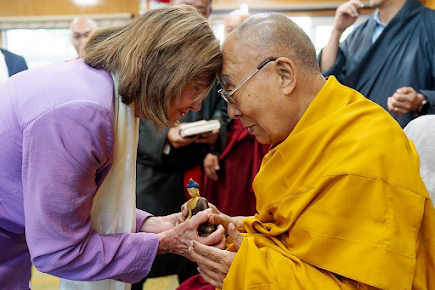
The Chinese dragon turns into a frenzy when other countries talk about Tibet or Tibetan identity and religion; and it breathes fire when anyone refers to the Dalai Lama, the spiritual leader of Tibetans. The recently passed US House of Representatives bipartisan bill that questions China’s control over Tibet seems to have achieved both the reactions. ‘The Promoting a Resolution to the Tibet-China Dispute Act’ is awaiting President Baiden’s signature. The Resolve Tibet Act, as it is referred to in short, seeks to promote a dialogue between the Chinese government and the Dalai Lama. It also empowers State Department officials to actively and directly counter ‘disinformation’ about Tibet from the Chinese government and reject false claims that Tibet has been part of China since “ancient times.” It pushes for negotiations without preconditions between the Chinese government and the Dalai Lama’s representatives. To add to China’s agony, close on the heels of the passing of the Resolve Tibet Act, a bipartisan US congressional delegation, led by House Foreign Affairs Committee chairman Michael Mc Caulis visited Dharamsala, the seat of Tibetan government in exile and met with Tibetan representatives. The delegates also called upon the Dalai Lama. Mc Caulis presented the Dalai Lama with a framed copy of The Resolve Tibet Act. Tibetans gave a public felicitation to the delegates after their meeting with the Dalai Lama. Former speaker Nancy Pelosi, member of the delegation addressing the gathering said “this bill is a message to the Chinese government that we have clarity in our thinking and our understanding of this issue of the freedom of Tibet.” After Pelosi said the Dalai Lama “with his message of compassion…and love, will live a long time and his legacy will live forever”, she fired a broadside at Chinese President Xi Jinping. She said “you will be gone and nobody will give you credit for anything.” The US delegation went on to New Delhi to meet with Prime Minister Narendra Modi. A few days ago, the Dalai Lama, aged 88, flew into New York to a warm welcome by hundreds of Tibetans. The Buddhist leader, visiting the US after 17 years, will be undergoing treatment for his knees. It is not clear whether the spiritual leader will meet any US officials during his visit. The US delegation’s visit to Dharamsala and meeting with the Dalai Lama and their promotion of the Resolve Tibet Act has drawn global attention to the Tibetan issue, which was almost forgotten. The publicity surrounding the Dalai Lama’s trip to the US has further infuriated Beijing. China minced no words in condemning the US Act and asked President Joe Biden not to sign it. Chinese foreign ministry spokesman Lin Jian told reporters “Any one or any force who attempts to destabilise Xizang (China’s official name for Tibet) to contain or suppress China will not succeed.” He called it a sovereignty issue and added “The US should not sign the bill. China will take resolute measures to defend its sovereignty, security and development interests.” Lin said Xizang was now enjoying a tranquil and harmonious society, positive economic growth and has opened up new grounds for long term stability and high-quality development. The American move on Tibet is making China highly uncomfortable. Is America trying to resurrect the Tibet autonomy issue as part of the Grey Warfare brewing for some time to cut down President Xi’s efforts to create a Sino-centric world order? It took the PRC three decades to bring Tibet under its full control. At the height of the Cold War, between 1950 and 1972 the Central Intelligence Agency (CIA) in close cooperation with the Departments of State (DoS) and Defense (DoD), conducted a comprehensive covert action campaign in support of Tibetan resistance movements fighting against Communist Chinese occupation of their homeland. The campaign’s stated goal was “to keep the political concept of an autonomous Tibet alive within Tibet and among several foreign nations.” Its similarity to the objective of The Resolve Tibet Act must be making China nervous. During the covert action, the CIA strengthened various isolated Tibetan groups to fight against the Chinese. It trained and raised a paramilitary force of 2000 Tibetans in the border areas of Nepal. During this period, the Dalai Lama and some 80 supporters fled to India on March 31,1959. India welcomed the spiritual leader and his supporters and offered them a home in Dharamsala. Since then, his presence across the border of Tibet acts as a beacon for Tibetans, who are slowly losing their culture and identity under Han hegemony. During the period of CIA intervention, some 87,000 Tibetans and 2,000 Chinese troops were killed. Over 100,000 Tibetans fled as refugees to India, Nepal, and Bhutan during the conflict. Revival of the Tibetan issue by the US will revive the bitter memories of the war of liberation, probably hidden from the younger generation of Tibetans. Tibetan government in exile estimates 1.2 million Tibetans -representing one fifth of the population - died due to China’s policies. Over 6000 monasteries, temples and historic buildings were destroyed. Thousands were arrested and suffered in prisons and labour camps. Another estimate suggests that more than 456,000 Tibetans were annihilated in the active conflict period between 1956 and 1962. In August 2020, President Xi in a speech said it is “necessary to actively guide Tibetan Buddhism to adapt to the socialist society and promote Sinicization of Tibetan Buddhism. In July 2021, Xi visited Tibet for the 70th anniversary of Tibet’s peaceful liberation. He emphasized the need to Sinicize Tibetan Buddhism and strengthen Tibetans’ identification with China and its culture. Sinicization of Tibetan Buddhism is an oxymoron as without Tibetan identity, language and culture the religion will not exist. Already, young Tibetans in China are losing touch with Tibetan language and culture as Tibet is swamped by Hans. Any foreign intervention could jeopardise Xi’s Sinicization plans. Since Xi Jinping came to power in 2012, China’s focus on Tibet’s border security and infrastructure has intensified. In particular, the infrastructure development of border areas with India has been taken up in a big way, perhaps to buttress his claims to Arunachal Pradesh, which China identifies as South Tibet. This includes the construction of 624 border defence villages. In the 14th Five Year Plan (2021-25), China has allocated 190 billion Yuan (about $29.3 billion) for infrastructure development in border regions. This includes civil and military infrastructure, roads, railways, expressways and airports. Already tightening of the border security measures has seen a drop in the number of Tibetans crossing the border as refugees, from 753 Tibetans in 2011 to five in 2022. China is unlikely to respond to the revival of any talks with the Dalai Lama and his representatives. Nine rounds of dialogues were held between them from 2002 to 2010. They did not yield concrete results. China insists on talking to the Dalai Lama’s representatives and not the representatives of the Tibetan government in exile based in Dharamsala. China also wants the Dalai Lama to “fundamentally reflect on and thoroughly correct his political views.” The Dalai Lama is not in good health and there is talk of choosing his successor in the air. The Chinese are likely to stall any American pressure to resume talks, till they choose a successor to the Dalai Lama. The CIA’s Tibet intervention ended in 1972 when POTUS Nixon wanted to recast US relations with China. The Dalai Lama in his 1991 autobiography Freedom in Exile has criticized the CIA for supporting the Tibetan independence movement not because they (the CIA) cared about Tibetan independence, but as part of their worldwide efforts to destabilize all communist governments. Given this background, the Tibet issue has the potential to become a talking point in the American presidential election debates in the next few months. The US is locked in the Ukraine conflict and in the South China Sea confrontation with China. It may not find the time and energy to revive the Tibetan intervention except as a potential threat to further unnerve the Chinese. John Kenneth Knaus, one of the CIA operatives who participated in the Tibetan resistance to fight China, aptly titled his memoir Orphans of the Cold War in sympathy for the plight of Tibetans. They have not only lost their independence, but also are in danger of losing their identity. India is in a unique position as any threat of American intervention can serve as an incentive for China to build better relations with India.Can India which has given refuge to the Dalai Lama and thousands of Tibetan refugees do more? I hope our political leadership ponders over this and factor it in India’s China policy. Col R Hariharan is a retired MI specialist on South Asia and Indian Ocean Region. He is associated with the Chennai Centre for Chin Studies. E-mail haridirect@gmail.com Website https://col.hariharan.info