Monday, 26 September 2022


Monday, 12 September 2022
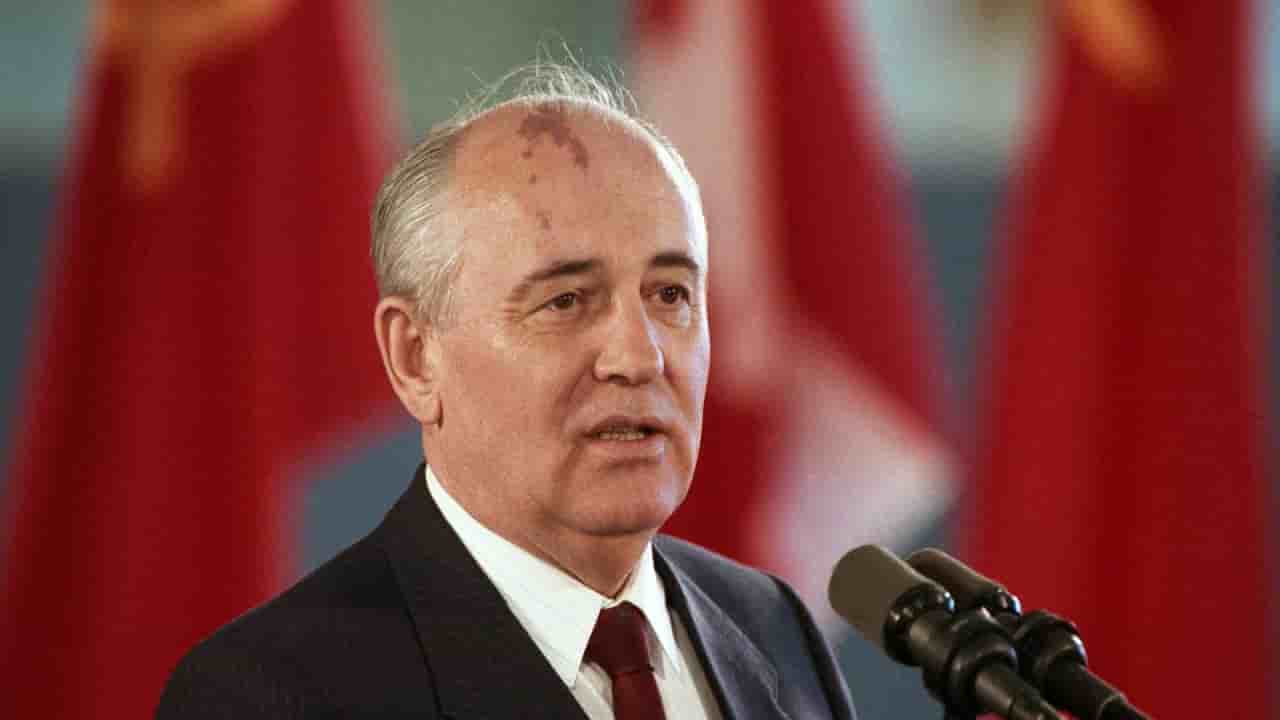
Mikhail Gorbachev: The Leader Who Lost an Empire
By Col R Hariharan |
Columns| India Legal Magazine | September 10, 2022
Mikhail Gorbachev,
the last head of state of the Soviet Union, passed away on August 30, at the
ripe old age of 91. His chequered life is strewn with service in the cause of
Communism as a party functionary and leader till 1985. Beyond that, his achievements
as the harbinger of peace and the end of the Cold War during his six-year
tenure as the general secretary of the Communist Party of the Soviet Union
(CPSU), are unmatched. UN Secretary General Antonio Guterres saw him as “a
one-of-a-kind statesman who changed the course of history” who “did more than
any other individual to bring about the peaceful end of the Cold War”.
But many Russians
see Gorbachev as the man who triggered the break up of the Soviet Union.
President Vladimir Putin called it 20th century’s “greatest geopolitical
catastrophe”. No wonder, Putin showed his disdain for Gorbachev by denying him
a formal state funeral. In any case, he was “too busy” to attend the funeral.
However, he is reported to have laid a single rose on Gorbachev’s coffin in the
Moscow hospital, perhaps because his place in history cannot be wished away.
Brookings foreign policy expert Strobe Talbott also saw Gorbachev as “the man
who lost an empire” in a December 1997 article of the same title.
However, it is not
wholly fair to blame Gorbachev for the collapse of the Soviet empire. When he
came to power in 1985, the country was already in deep economic trouble. By
then, Brezhnev Doctrine—all socialist countries had a duty to support and
defend socialist gains—which was applied for nearly three decades to protect
Soviet interests the world over had drained the economy. As Leonid Brezhnev
aged, his effectiveness as a ruler plummeted. Bureaucracy was stifling the
system and corruption was rampant. Brezhnev’s successors Yuri Andropov and
Konstantin Chernenko, who led the country from 1982 to 1985, missed the wood
for the trees. They could not understand that the decay in the system required
more than cosmetic repairs like tightening party discipline and fighting
corruption.
There
are many ways of looking at Gorbachev’s life. Let us look at his evolution from
a devoted Communist functionary to a leader, statesman and dreamer. The
political journey of Gorbachev started as a 19-year-old applicant to the CPSU,
promising to be “faithful to the great cause of Lenin and Stalin, to devote his
life to the party’s struggle for Communism”. How he went on to start the
process of loosening the Party’s stranglehold on power in 1991 presents a
fascinating story. It represents the three stages of Gorbachev’s life: as a
faithful functionary coming to terms with the application of Stalinism and
Leninism as the party doctrine in the early years; as a ruler trying to make
the CPSU more democratic and humane; and lastly, failing to see the rise of
Russian nationalist idiom which was used by Boris Yeltsin to dethrone him after
the dissolution of the Soviet Union in 1991. Of course, the events thereafter
marginalised Gorbachev’s role from the centrestage of Russian politics. It was
brought to a close after his defeat in the presidential election in June 1996.
Pitted against Yeltsin, Gorbachev could secure only 0.5% votes. It was a
demonstration of Russian nationalists’ disillusionment with Gorbachev.
Gorbachev
at the age of 54 was perhaps the youngest leader to be elected for the post of
General Secretary of the CPSU in 1985. After graduating in law from Moscow
University in 1955, Gorbachev preferred to become deputy director of the
agitation and propaganda department of the Komsomol Youth League in Stavropol
region rather than taking up a legal career. Despite his strong commitment to
the party, the young Gorbachev saw some truth in Nikita Khrushchev’s
denouncement of the cult of personality and Stalinism in his secret speech at
the 20th Party Congress of the CPSU in February 1956.
Khrushchev,
known as the crude, bumptious henchman of Stalin, was the antithesis of the
suave, loquacious, charming and sociable 25-year-old Gorbachev. But
Khrushchev’s actions—freeing of prisoners from the Gulag and relaxation of
censorship and repression—probably made a strong impression on Gorbachev. In
1970, he became the first secretary of the Stavropol region, which
automatically made him a member of the Central Committee of the CPSU in 1971.
As a regional leader, he developed close relations with Brezhnev and enjoyed
the party’s trust. This enabled him to visit western Europe five times between
1970 and 1977 as a member of Soviet delegations. The open and free society he
saw in Belgium, Netherlands, France and Italy impressed him. Wikipedia quotes
biographer Taubman: “He later related that for him and his wife, these visits
‘shook our a priori belief in the superiority of socialist over bourgeois
democracy’.”
The party
downgraded Khrushchev and sent him on “special pension”, a euphemism for
prison. The Brezhnev Era that followed was also a period of dissidents like
Alexander Solzhenitsyn and Andrei Sakharov coming into prominence. The state
stripped Solzhenitsyn of his citizenship and sent him into exile in 1974 when
the manuscript of The Gulag Archipelago was smuggled out of the Soviet Union to
be published as a bestseller worldwide. Solzhenitsyn became an intense critic
of Gorbachev’s reforms, particularly after he rejected the author’s proposal
for replacing the Soviet Union with an all-Slavic state as unacceptable and
impractical. However, Gorbachev was the one who disbanded the last of the
Gulags. He allowed the publication of Solzhenitsyn’s works in keeping with
perestroika and restored the author’s Soviet citizenship that enabled him to
return home to a hero’s welcome in 1994. These actions depict the humane side
of Gorbachev’s personality.
Soon
after coming to power in 1985, Gorbachev like his predecessors tinkered with
the economic policy to increase growth with capital investment. He launched
perestroika (restructuring) to make it easier to do business in the Soviet
Union. Despite adopting gradual measures to create a semi-market economy, he
could not turn the command economy into a truly market one. However, it made
the job of his successors easier to attract foreign investment and integrate
Russia in the global marketplace.
The
Chernobyl disaster, barely a year after he came to power, was probably a moment
of truth for Gorbachev’s disillusionment with the Soviet system. It renewed his
faith in Glasnost (openness), his second vital reform. The spirit of openness
spread widely, particularly among journalists. He used his knowledge of the
Soviet political system to manoeuvre his way to democratise the constitution
and introduce a multi-party system.
In 1989, Gorbachev
withdrew Soviet troops from Afghanistan after a decade of bloodletting in the
war with Islamic insurgents. He agreed to the unification of East and West
Germany. His biggest contribution was in triggering nuclear disarmament in his
three summit talks with US President Ronald Reagan. Gorbachev’s speech at the
UN General Assembly in 1987 will be remembered for his announcement of a unilateral
reduction of Soviet armed forces by half a million. He also announced the
withdrawal of 50,000 troops from central and eastern Europe, before meeting
Reagan.
However,
Gorbachev’s relentless efforts yielded results only when POTUS George W Bush
visited Moscow in July 1991. They signed the START I treaty (Strategic Arms
Reduction Treaty), a bilateral agreement for the reduction and limitation of
strategic offensive arms. Gorbachev met Deng Xiaoping in 1989 even as crowds
were gathering at Tiananmen Square to mend the fractured relations with China.
Gorbachev dreamed
of a world without war. In his Nobel Peace Prize acceptance speech on December
10, 1990, he quoted Immanuel Kant’s prophesy that mankind would “one day be
faced with the dilemma: either to be joined in a true union of nations or to
perish in a war of annihilation ending in the extinction of the human race”. He
said that “as we move from the second to the third millennium, the clock has
struck the moment of truth”. He added that the year 1990 marked the end of the
unnatural division of Europe. “Germany has been reunited. We have begun to tear
down the material foundation of a military, political and ideological
confrontation,” he said.
However, he warned
that “there are some very grave threats that have not been eliminated: the
potential for conflict and the primitive instincts which allow it, aggressive
intentions and totalitarian traditions”.
Gorbachev’s ominous
warning seems to have come true with the war in Ukraine. No wonder he died with
a broken heart at the war.
The writer is a
retired military intelligence specialist on South Asia associated with the
Chennai Centre for China Studies
Friday, 2 September 2022
Sri Lanka’s first firm steps at economic reforms
Col R Hariharan
Sri Lanka Perspectives August
2022| South Asia Security Trends, September 2022 www.security-risk.com
Overview
President Ranil Wickremesinghe took tentative steps to bring a
semblance orderly governance during the month. He ended the month presenting an
interim budget to stabilize economic growth with the aim to create a surplus by
2025. After the exit of the Rajapaksas, their hopes of Wickremesinghe restoring
democratic governance were belied when the government used the Prevention of
Terrorism Act (PTA) to rounded up the Aragalaya leaders, drawing severe
criticism from civil society and the UNHRC.
There is a sense of disappointment
among the people to see parliamentarians reverting to ride their hobby
horse - jockeying for power, tinkering with
legislation in the name of curbing executive powers of the president and
endlessly talk of the elusive “all party government”.
On the positive side, the young energy minister Kanchana
Wijesekara seems to be making honest efforts to tame and rationalise energy
pricing and distribution. The talks with the International Monetary Fund (IMF)
have progressed, though efforts to reschedule creditors is making halting
progress, with China playing truant. President Wickremesinghe seems to have
succeeded in his tightrope act in foreign policy so far, despite the
India-China differences coming alive over China berthing its spy ship in
Hambantota port in spite of India’s security concerns.
Interim
budget and economic reforms
Presenting the Budget, President Wickremesinghe
said the government’s aim is “to create a surplus in the primary budget by the
year 2025.” The Daily FT listed six salient aspects of the budget. These
included the announcement on billions of rupees-worth social safety measures,
quit notices to public servants over 60, restructuring for key 50 state owned
enterprises (SOE), measures to kickstart revival in agriculture, industry and
tourism, write off default loan of farmers and announcement of wide-ranging
revisions to many existing legislations.
Every Sri Lankan would agree with his remark
that the country “can no longer be a nation dependent on loan assistance….We
can also no longer be used as a tool of interference by other countries with
strong economies. All of our collective vision should be to make our country
strong and stable, in order to stand independently.”
However, Wickremesinghe’s reiteration of the
call to political parties to join the “All Party Government” is probably has
only some cosmetic value to the political discourse as the APG is a
non-starter. While this may be the need of the hour, much will depend upon how
the political cookie crumbles. As he said, if Sri Lanka “miss these
opportunities, we will be marginalized globally.” But the credibility of his
remarks is weakened as the same tainted political class is still calling the
shots in the present government. There is talk of former president Gotabaya
Rajapaksa returning home on September 24 from his self-exile in Thailand. If
that comes true, Wickremesinghe should get ready to handle the unsavoury task
of yet another socio-political turbulence.
The main opposition Samagi Jana Balawegaya
(SJB) has welcomed the budget. SJB MP and economist Dr Harsha de Silva saw it
as an attempt by the President to change the course of the country into a
‘modern productive enterprise’ by undertaking serious reforms to stabilise and
restructure the economy. To achieve this, the President has proposed the
introduction of new laws like the Public Finance Management Act to run the
affairs of the government and amendments to the Monetary Law Act to reduce the
pressure on the Central Bank from Treasury and reduce money printing. The
introduction of the new laws will have a more disciplined system of governance.
With entrenched in political and trade union
interests in SOE and among public servants, Wickremesinghe is likely to face a
tough task at every step in fulfilling this part of the agenda. As Dr de Silva
pointed out “They (SLPP) opposed every type and every time reforms were brought
up for four decades. It is a quirk of circumstances and fate almost that is
them who will have to do these reforms now.”
The state-owned Sri Lankan airlines is a case
in point. It has accumulated a staggering $ 1 billion debt and dues comprising
of $ 175 million government guaranteed international bond, $ 380 million
payable to state banks, BOC and Peoples Bank and $ 80 million loan taken from
BOC by mortgaging shares of Sri Lankan Catering. The government can no longer
fund the national carrier given the country’s financial, forex and economic
crisis.
However, the privatisation of this white
elephant is going to be an uphill task, as leftist trade unions rule the roost
in most of the SOEs and see a red flag in any talk of privatisation. Already,
there are protests voiced against the proposed privatisation of retail
distribution of fuel. Ultimately, when IMF’s structural reforms come into full
play, Sri Lankans will have no option but to corral and weed out 60 odd white
elephants of SOE.
As PM in the
Sirisena-Wickremesinghe government, Wickremesinghe had co-sponsored the UNHRC
Resolution 30/1 adopted in 2015. To retain his international credibility, he
will have to bring the issue to a logical conclusion by establishing a credible
judicial process to bring to book alleged right abusers. This is a humongous
task as the President is dependent upon the SLPP support.
The first step in improving
the government’s accountability process would be to abolish the PTA “one of the
key enablers of arbitrary detention for over decades” as described by a UN
body. Unfortunately, the government has used it to arrest Aragalaya protestors.
Instead of doing away with PTA, the government efforts are on subsume its
provisions in a National Security Act (NSA). This could only bring
international criticism to the government, when it is trying to maximise its
economic support. Of course, the larger question of implementing 13th
Amendment in full is still lingering and this is yet another pressure point.
China’s wolf diplomacy in action
China’s “spy ship” Yuan Wang-5 docked in Sri
Lanka’s Hambantota port from August 16 to 22 disregarding the security concerns
of both India and the US and turning down Sri Lanka’s request to defer the
visit. The research ship belonging to the PLA’s 5th branch – the Strategic
Support Force (PLASSF) - created in December 2015, is capable of carrying out
space, cyber and electronic warfare. It also has the capability to assist PLA’s
land-based stations in tracking satellite, rocket and ICBM launches within a
range of 750 km. There is more to China’s insistence on docking Yuan
Wang-5 in Hambantota port than refuelling and replenishment. China
was testing the depth of India-Sri Lanka relations which have become closer
than ever before. It is also a strong affirmation of China’s influence on Sri
Lanka and the Indian Ocean Region. This was indicated in an op-ed the Chinese ambassador
to Colombo Qi Zhenhong wrote in Sri Lanka media. Hinting at India,
he warned “any infringement on the national sovereignty, independence and
territorial integrity of Sri Lanka shall not be tolerated” (obviously by
China). He further added, “External obstruction based on the so-called
‘security concerns’ but without any evidence from certain forces is de facto a
thorough interference into Sri Lanka’s sovereignty and independence.”
The Chinese ambassador also reminded Sri Lanka
of the 51st session of the UN Human Rights Council to be held in
Geneva where human rights issues of Sri Lanka might be stirred up, where China
could help. India took strong exception to the Chinese envoy’s article. The
Indian High Commission in Colombo departing from the norm, let loose broadsides
on the article saying “His violation of basic diplomatic etiquette may be a
personal trait or reflecting a larger national attitude.” It added, “His views
of Sri Lanka’s northern neighbour may be coloured by how his own country behaves.
India, we assure him, is different. His imputing a geopolitical context to the
visit of a purported scientific research vessel is a giveaway.” It is
evident, India is not prepared to tolerate any more needling from China.
External Affairs Minister Jaishankar during his South American tour explained
that the relationship (with China) cannot be a one-way street. “They are our
neighbour and everybody wants to get along with their neighbour…But everybody
wants to get along with their neighbour on reasonable terms. I must respect you
and you must respect me.” He stressed that each one will have their interests
and we need to be sensitive to what the concerns are of the other party.
Tail piece: Yuan Wang-5 is
currently 400 nautical miles South-Southeast of Dondra Head at the southernmost
tip of the island nation. It is a matter of detail that the vessel is mapping
the ocean bed in an area close to the US military base in Diego Garcia.
[Col
R Hariharan, a retired MI specialist on South Asia and terrorism, served as the
head of intelligence of the Indian Peace Keeping Force in Sri Lanka 1987-90. He
is associated with the Chennai Centre for China Studies. Email: haridirect@gmail.com Website: https://col.hariharan.info]
Sunday, 28 August 2022
The China-Lanka Conundrum

There was much consternation in India over the Chinese spy ship docking in Sri Lanka. India expressed its security concerns over berthing the ship at the Hambantota port. The truth is that symbolism triumphed over substance
By Col R Hariharan | Columns | India Legal | August 26, 2022 https://www.indialegallive.com/column-news/china-spy-ship-yuan-wang5-sri-lanka-hambantota-india-pla/
The controversial
visit of China’s “spy ship” Yuan Wang-5 to Sri Lanka’s Hambantota port from
August 16 to 22 is perhaps Sri Lanka’s most commented news story, next only to
President Gotabaya Rajapaksa’s escape in stealth from the island-nation a few
weeks earlier. The reason is not far to seek; the research ship belongs to the
PLA’s 5th branch – the Strategic Support Force (PLASSF) created in December
2015 to carry out space, cyber and electronic warfare. The ship is equipped
with advanced electronic equipment, sensors and antennae to assist PLA’s
land-based stations in tracking satellite, rocket and ICBM launches within a
range of 750 km.
Sri Lanka’s foreign
affairs originally allowed the vessel to dock in Hambantota from August 11 to
17. India expressed its security concerns over berthing the ship in Hambantota
as soon as reports indicated that the ship was heading to the Sri Lankan port.
The US also had expressed its security concerns. Perhaps in deference to
India’s concerns, the ministry in a message to the Chinese embassy asked the
visit be delayed until further consultations. The Chinese embassy clarified
that the maritime research vessel’s visit was for replenishment and refuelling
and did not pose a threat to any security or economic interests. It eventually
succeeded in pressuring Sri Lanka’s defence ministry to allow the research
vessel to berth in Hambantota port from August 16 to 22, after laying down
conditions that it would switch off its tracking equipment.
The
media pundits in India went to town with analyses of how the ship’s berthing in
Hambantota would compromise the security of our naval bases and satellite
launch sites and missile launches. The plain truth is Yuan Wang-5 is capable of
carrying out all these actions even without docking in Hambantota port. Many
analyses across global media had been cautioning the US of China overtaking it
as a strategic power. These analyses were basically revisiting the bogey of
China’s growing military prowess in the Indo-Pacific.
Social media
castigated Sri Lanka for its “ungratefulness” to India, which had gone all out
to lend a helping hand in times of Sri Lanka’s economic distress, unlike China.
Some critics called it a violation of the India-Sri Lanka Accord 1987, though
the Accord has no specific clause forbidding the berthing of warships of other
countries in Sri Lanka ports in peacetime. Moreover, Sri Lanka had been
repeatedly reassuring India at various levels that it would not allow the use
of its soil to pose a security threat to India.
The
controversy over Yuan Wang-5’s visit is timed to draw attention away from
growing India-Sri Lanka relations, which are on the apogee. Probably it is also
aimed at reminding Sri Lanka that it cannot afford to ignore China’s interests,
now embedded in the body politic of the island-nation. Moreover, for some time
now, Sri Lanka is in talks with India at multiple levels to upgrade its
transactional relations into a strategic relationship. These efforts have
encouraged India to extend all out support to the people of Sri Lanka to meet
their essential economic and energy requirements after the country went
bankrupt. India’s support has continued, in spite of political uncertainties in
the country after the unceremonious exit of President Gotabaya Rajapaksa and
the ascent of Ranil Wickremesinghe as president.
It is worthwhile to
examine the Yuan Wang-5 issue in the larger context of the strategic dynamics
of the Indo-Pacific. Alfred North Whitehead, mathematician and process
philosopher considers “symbolism as no mere idle fantasy or corrupt
degeneration. It is inherent in the very texture of human life.” His words:
“there is urgency in coming to see the world as a web of interrelated processes
of which we are integral parts, so that all of our choices and actions have
consequences for the world around us” have great relevance in understanding the
substance behind China’s acts of symbolism.
India celebrated
Azadi Ka Amrit Mahotsav—75 years of India’s independence—on August 15. On that
day, the Xinjiang command conducted live-fire drills near the LAC with a “new
type of surface-to-air missile” at an altitude of more than 4,500 metres
(14,760 feet). A report in the South China Morning Post quoted military
observers to say the weapons appeared to be HQ-17A air defence missiles, part
of an integrated system that can fit in a single vehicle. Yuan Wang-5 steaming
into Hambantota a day after India’s Independence Day is also symbolic of China
enforcing its writ in Sri Lanka despite India’s security
concerns.
More than all this,
Yuan Wang-5 is a demonstration of PLASSF capability as part of China’s power
projection in space and cyberspace. The SSF is also designed to coordinate
intelligence sharing and operations in the informatized battlefields in real
time. Informatization has been the mantra of Chinese Communist Party (CCP) ever
since PLA thinkers drew many lessons from their observations of the US Gulf War
(1991) and Iraq War (2003). In their assessment, the US used effective
coordinated employment of global media, international law, and other
psychological warfare techniques. The use of these techniques collectively
referred to as “three warfares” could enhance results as military operations became
more and more dependent on information technology tools.
The concept of
“three warfares” was incorporated in the PLA Political Work Regulations for
future conflicts in 2003. This has resulted in increased coordination of civil
and military organs of state since then to get the best results of “three
warfares”.
The
timing of the Yuan Wang-5 controversy is uncanny. On June 6, India successfully
carried out the training launch of the intermediate range ballistic missile
Agni-4 from APJ Abdul Kalam Island off Orissa under the aegis of the Strategic
Forces Command. The visit of Yuan Wang-5 is perhaps China’s way of flaunting
its capability to track India’s ICBM launches. A month later, PLA tested an
advanced PHL Multiple Launch Rocket System (MLRS) at an altitude of more than
5,300 metres in the Xinjiang Region.
India’s
Foreign Minister S Jaishankar has been on a mission for some time to lay bare
China’s double speak on matters related to India in many international forums.
Only a month earlier, the 16th round of border talks between Corps Commanders
of India and China ended in yet another stalemate. Last week in Bangkok,
Jaishankar said the relationship between India and China is going through an
“extremely difficult phase” after the Galwan incident in the Ladakh border in
2020. He emphasised that the Asian Century will not happen if the two
neighbours could not join hands. “We very much hope that wisdom dawns on the
Chinese side,” he said while replying to a question in Bangkok.
Now
on a six-day tour of South America, Jaishankar said China has cast a shadow on
bilateral ties by disregarding border pacts with India. He said the
relationship cannot be a one-way street. “They are our neighbour and everybody
wants to get along with their neighbour…But everybody wants to get along with
their neighbour on reasonable terms. I must respect you and you must respect
me,” he added. The EAM said “from our point of view, we’ve been very clear that
if you have to build a relationship, then there has to be mutual respect. Each
one will have their interests and we need to be sensitive to what the concerns
are, of the other party.”
Sri
Lanka is caught not only in the midst of muscle flexing between India and China
in the Indian Ocean region, but it is also facing the flak of the strategic
maelstrom blowing across the Indo-Pacific, after the visit of the US House
Speaker Nancy Pelosi to Taiwan on August 2. President Xi Jinping had spoken to
POTUS Joe Biden, a month earlier to prevent the visit. According to media
reports, President Biden not only told Xi that he “could not oblige” as the US
Congress was an independent body, but also warned the Chinese president against
taking any “provocative and coercive” actions if the visit took place. Pelosi’s
visit may be considered a big loss of face for Xi, particularly when he is
poised to be re-elected as the CCP General Secretary in the next few months.
The invectives China has used to condemn the US and its allies on this issue
show that the stand-off over Taiwan is likely to continue for some time. We can
expect the spill over of the continuing US-China confrontation in the Indian
Ocean region in the coming months. It is imperative that China’s symbolic acts
are studied to gauge the substance behind them to understand its intentions.
The writer
is a retired military intelligence specialist on South Asia associated with the
Chennai Centre for China Studies
Monday, 22 August 2022
Wednesday, 3 August 2022
Sri Lanka: Wickremesinghe in Presidential Avatar
Col R Hariharan
Sri Lanka Perspectives July 2022| South Asia Security Trends, August 2022 www.security-risk.com
Ninth of July 2022 would long be remembered in Sri Lanka as the day the three-month long ‘Aragalaya’ peoples protest movement succeeded in forcing their elected President Gotabaya to agree to resign on July 13. However, the President agreed to resign only after protestors forcibly occupied the President’s House and secretariat and laid siege to the prime minister’s Temple Tree residence on July 9. They forced him to flee from Sri Lanka to Maldives and later end up in Singapore. His resignation came by e-mail to the Speaker four days later from Singapore. His future continues to be as uncertain as the country clawing its way from bankruptcy.
The month also saw the change of fortune of Ranil Wickremesinghe, long time presidential aspirant, who never got elected. Wickremesinghe was brought in as prime minister by President Rajapaksa after public protests on May 9 forced PM Mahinda Rajapaksa to quit and seek safe haven. On the fateful night of July 9 irate mobs set fire to PM Wickremesinghe’s private residence to punish him for his association with the President. It is ironic that the continuing Aragalaya protests have paved the way for PM Wickremesinghe to be elected president by majority of parliamentarians. In a secret ballot held on July 20, he secured 134 votes, with a comfortable margin of 52 votes over his nearest rival Dallas Alahapperama of SLPP. Dallas had wanted Rajapaksas to quit and apparently this had cost him the election, despite the support of the main opposition party SJB led by Sajith Premadasa.
Wickremesinghe’s victory is a demonstration of the influence wielded by the Rajapaksas in the present parliament, despite their absence. President Wickremesinghe will resist any call for him to quit and serve till November 2024 when the next presidential poll is due. As he enjoys majority support in parliament, courtesy the shadowy influence of Rajapaksas, he will be in no hurry to call for a general election, as his detractors have demanded. It will be reasonable to suppose the Wickremesinghe government’s long arm of law will show no haste to book the Rajapaksas for the excess of the earlier government.
It is equally plausible that the cases against the Rajapaksas hurriedly closed during the last three years may not be reopened at least till the next election. After all, under Wickremesinghe’s watch as PM during the Yahapalana government days prosecutions against the Rajapaksas were never completed. The effort to safeguard the interests of the Rajapaksas is evident from the cabinet spokesman Bandula Gunawardena’s statement that Gotabaya Rajapaksa went to Singapore through formal channels. He said it was not accurate to say that he was hiding. In view of this, the spokesman’s statement that he expected Gotabaya to return to Sri Lanka from Singapore has to be taken with a pinch of salt.
In short, the Rajapaksa fortunes may be down for some time, but not out. This was amply demonstrated by former president Mahinda Rajapaksa, who managed to bring back the Rajapaksa raj, after a short and troubled interregnum of only five years of opposition rule. Mahinda, the astute politician, may well be working now to find answers to the questions when and how to stage a political comeback.
The lingering influence of the Rajapaksas can stoke President Wickremesingh’s own desire to put down Aragalaya protests, which turned his private residence to ashes. Even as Acting President, the first thing he did was to declare a state of emergency “in the interests of public security, the protection of public order and the maintenance of supplies and services essential to the life of the community" in the absence of President Rajapaksa. Later, curfew was again enforced to ensure the smooth conduct of the Presidential election on July 20. A power outage that blacked out the direct telecast of the swearing in ceremony of President Wickremesinghe a day later, triggered a police investigation. It dramatically depicted the troubles that the newly anointed president will be facing in gaining public confidence in the political process, lost in three months of Aragalaya protests.
This would explain President Wickremesinghe’s rather heavy-handed crackdown on protestors, using the army and the STF, to clear the President’s House and Secretariat occupied by them. The authorities have arrested Pathum Kerner, one the founders of the ‘GotaGoGama protests. Police are on the look out to arrest other leaders of the Aragalaya. They are searching several church premises to arrest Fr Amila Jeewantha Peiris, a Catholic priest and activist. Arrest warrants have also been issued to nab activists Lahiru Weerasekara and Venerable Tamipitiye Sugathananda when they failed to appear before the court to answer charges of unlawful assembly. Inter University Student Federation(IUSF) convenor Wasantha Mudalige, who is one of the brains behind the Aragalaya, has been served with a no foreign flight order.
Action is also in hand to intimidate digital journalists and block the social media sites which had stoked the flames of protest from shadowy domains. The Aragalaya protestors' sloganeering has now changed from GotaGoGama to GoHomeRanil as displayed in an artwork at the Galle Face promenade, after the police cleared the site of over three months of protest.
President Wickremesinghe has brought in the SLPP’s former leader of the House and long-time parliamentarian Dinesh Gunawardena as PM. His 21-member cabinet is largely composed of those who had served in the Rajapaksa government. This has drawn derisive comments of old wine in old bottle, with a new Wickremesinghe label. President Wickremesinghe and PM Gunawardena have started their rule with the inherited burden that brought down President Rajapaksa’s rule. For the common man it meant high inflation and cost of living, shortages, rationing of fuel, queues and attended nepotism, power cuts, restricted functioning of public offices and schools, cronyism, bribery and corruption. The President-PM pair have to not only overcome, but also outlive, their image tarnished by association with the Rajapaksas. This is probably a no-win situation for them as the present parliament is dominated by SLPP largely under the influence of the Rajapaksas.
The President will probably make his policy statement in his throne speech when the Parliament is reconvened on August 3. His policy thrust is likely to focus on forming an all-party administration to help the country cruise through the current economic and political crises. This is a tall order as major parties have their own agenda and interpretation of the all party government. Finding a common ground among them is likely to be the President’s number one political challenge.
Equally important for him is to strike an equation with the younger generation and middle class, who form the core of Aragalaya protests. Their demands may seem to be irreconcilable. But the President has to find a middle ground to bring them to the political mainstream. Well known entrepreneur and philanthropist JRD Tata said “Future belongs to the young. We must not only trust them with the responsibility but must thrust it upon them whilst they are still young and full of energy, zest, hope and even illusions. However heart-breaking it may be to ourselves; we must make way for the new generations even when we feel we are still in our prime.” That should be the mantra of President Wickremesinghe.
Perhaps, this is the first
time in South Asia, a largely peaceful peoples protest has succeeded in forcing
a leadership change. Of course, such changes have taken place in Pakistan,
Bangladesh and Nepal, mostly with military intervention or meddling with the
constitution. So, Sri Lankans should feel proud and confident of the future; their
energies should focus on using the tools of democracy to create an environment
conducive for political and economic recovery. They have no other option. The
onus to create such an environment largely rests on President Wickremesinghe’s
conduct.
[Col R Hariharan,
a retired MI specialist on South Asia and terrorism, served as the head of
intelligence of the Indian Peace Keeping Force in Sri Lanka 1987-90. He is
associated with the Chennai Centre for China Studies. Email: haridirect@gmail.com Website: https://col.
Friday, 15 July 2022
After Gotabaya, analysing who, what and when of Sri Lankan crisis
Answers can only be found when the confrontation between the government and the protestors is resolved amicably and a new President is elected on 20 July to restore some stability
Col R Hariharan | Opinion|
Firstpost. | July 14, 2022 07:36:55 IST
Sri Lanka President Gotabaya Rajapaksa, after enduring
massive protests against him for three months, fled the country with his wife
and two bodyguards in a Sri Lanka air force plane to the Maldives on Wednesday.
This may well be the swan song of his brief foray in Sri Lanka politics. Only
three years ago, Army veteran Gotabaya, hailed as the hero of the Eelam War,
scored a thumping victory in the presidential poll, and promised as the
guardian of Buddha Sashana, security and stability for everyone. He has now
fled the country, leaving it on the brink of chaos. A day earlier, he made an
effort to leave the country in an airline aircraft. However, it failed after
Colombo airport officials could not guarantee his security when the passengers
objected to his travel.
In his last act as President and Commander-in-Chief of
armed forces, Gotabaya commandeered an air force plane to take his entourage
for the Maldives in the wee hours on 13 July. According to media reports, he
had secured a visa to the Maldives, after the US, India and the UAE denied it.
It is ironic that Gotabaya gave up his US citizenship to become eligible to
contest the presidential poll in 2019.
Gotabaya may have wanted to spend time in peace in Male,
ruing Bob Dylan’s 1976 lyrics of Going,
Going, Gone: “I’ve just reached a place/Where the willow don’t
bend/There is not much more to be said/It’s the top of the end/I’m going/I’m
going/I’m gone.” But that was not to be, as crowds of Maldivians and expatriate
Sri Lankans gathered outside Maldives president Ibrahim Solih’s house,
demanding Rajapaksa be sent back to Sri Lanka. The hapless Rajapaksa will now
be catching a flight to Singapore, where he has been given asylum.
He will be joining the global list of ‘illustrious’
veterans including Idi Amin Dada and Pervez Musharraf, who set out to remove
the kinks in democratic rule, but ended up in exile. Generally, their ambition
and greed overtook the norms of good governance and democratic conduct.
The former president has left the nation, grappling with not
only empty coffers and shortages of food and fuel, but also to find answers to
three Ws — Who, What and When — after his departure? It is not easy to find
answers to the three questions. The triumph of three-month-long people’s
struggle on 9 July has changed the dynamics of Sri Lanka’s traditional power
politics, dominated by two dozen families. It has demonstrated that rulers,
however popular and powerful they are, cannot take the people for granted, for
all times to come.
This was brought home on 9 July, when protestors in
thousands responding to the nationwide call, overcame police barricades and
water cannons and teargas to forcibly occupy the President’s House and
Secretariat and Temple Trees, the official residence of the prime minister.
President Rajapaksa had agreed to resign on 13 July. Prime Minister Ranil
Wickremesinghe had agreed to resign when an all-party government was formed.
The protestors have continued to occupy the seats of power till the resignation
of the president and prime minister is implemented.
The three Ws have gained urgency after Speaker Mahinda
Abeywardhane announced that on 20 July, Parliament members will be electing a
new President. As per Sri Lanka’s Constitution, the newly elected president
will serve the balance of the term of Gotabaya’s tenure till November 2024. He
will also be choosing his team including the prime minister and ministers to
run the government. The parliamentarians will be electing the new president by
secret ballot which could cut across party loyalties. So, political leaders are
carrying on hectic lobbying to decide their choice.
Three names circulating as presidential aspirants are Prime
Minister Ranil Wickremesinghe, leader of the Opposition (of Samagi Jana
Balawegaya — SJB) Sajith Premadasa, and Sri Lanka Podujana Peramuna (SLPP) MP
Dallas Alahapperuma. A section of the SLPP wants Wickremesinghe to become
President, while SJB has fielded Premadasa for the post of president. SJB’s
offer of prime minister’s post to Alahapperuma has not been accepted, presumably
because SLPP is the largest party in Parliament. Many political leaders have
objected to Wickremesinghe, who lost the parliamentary election making a
backdoor entry as president.
The Janatha Vimukti Peramuna (JVP), which had been on the
forefront of protests, is said to be in favour of appointing Speaker Mahinda
Abeywardane as president. It feels the appointment of a political leader with
future presidential ambitions will work with a bias in favour of his party.
But the whole political process took an unexpected turn for
the worse on 13 July, after President Rajapaksa left for the Maldives without
submitting a letter of resignation. According to the Speaker, he had promised
to submit it before the end of the day. In the meanwhile, President Rajapaksa
has informed the Speaker that as he was going out of the country, he was
appointing Prime Minister Wickremesinghe as Acting President, in terms of
Article 37(1) of the Constitution. Accordingly, Wickremesinghe assumed the
office as Acting President.
The first thing the Acting President did was to order an
island-wide emergency ostensibly because the president was out of the country.
He followed it with the imposition of curfew in Western Province. After
thousands of angry protestors surrounded the prime minister’s office,
Wickremesinghe ordered the security forces to round up those engaging in unruly
behaviour and impound the vehicles used by them. However, repeated use of
teargas and baton charges could not stop the mob entering the prime minister’s
office.
In the midst of utter chaos, Wickremesinghe, in a special
TV address, on Wednesday said that a committee comprising the CDS, IGP and
commanders of three services has been appointed to restore law and order to
bring back normalcy. He also said he had given instructions to the security
forces to control the situation in the country.
He said that he had met the party leaders to discuss the
situation that can arise after the resignation of President Rajapaksa. He said
that they had decided to hold the election for the presidency and provide
security to parliamentarians.
He alleged that some groups of protestors had organised to
storm the prime minister’s office and surround the residence of the air force
commander for providing President Rajapaksa a plane to fly to Maldives.
According to intelligence reports, the protestors were attempting to capture
power through such activities and they had also planned to storm the
Parliament. He averred that he had declared both an emergency and a curfew to
“do away with this threat of fascism. We have to protect the homes of the
average citizens”.
So, it seems Sri Lanka is back to the brink of chaos as the
protestors have no faith in the pious words of politicians. The youth who are
energising the protests cannot be wished away as they are a determined lot.
Answers to “Who, What and What, after Gotabaya” can only be found when the
confrontation between the government and the protestors is resolved amicably
and a new President is elected on 20 July to restore some stability. Otherwise,
it will be a tragedy as people are reeling under shortages of food stuff and
fuel, in the midst of chaos.
The
author is a retired MI specialist on South Asia and terrorism, served as the
head of intelligence of the Indian Peace Keeping Force in Sri Lanka 1987-90. He
is associated with the Chennai Centre for China Studies. Views expressed are
personal.
Subscribe to:
Posts (Atom)