Wednesday, 7 August 2024


Sunday, 4 August 2024
Sri Lanka’s Quest for a Man for All Season

Col R Hariharan
Sri Lanka Perspectives July
2024 | South Asia Security Trends, August 2024 | https://www.security-risks.com
Presidential aspirants
Sri Lanka people will be
voting to elect their next President on September 21. The Election Commission’s
announcement on the election sets to rest all the speculation about political
moves to postpone it.
The month ended with six
presidential aspirants in the fray. According to the Election Commission
of Sri Lanka (ECS) six candidates who deposited the money required to contest
the presidential election included two independents and four representing
political parties or formations. President Ranil Wickremesinghe and former MP
Sarath Keerthirathne are contesting as independents. The four candidates
representing political parties/groupings – opposition leader Sajith Premadasa
(Samagi Jana Balawegaya -SJB), social activist Oshala Herath (New Independent
Front), ASP Liyanage (Sri Lanka Labour Party) and PWSK Bandaranayake (Jathika
Sanwardhana Peramuna).
AK Dissanayake (a.k.a AKD),
the leftist leader of the National Peoples Power (NPP)- JVP combine, is likely
to file his nomination in the next few days.
In addition, Field Marshal
Sarath Fonseka, who led the Sri Lanka army as Army Commander to victory against
the LTTE, has also announced that he would contest the presidential election.
“For 76 years, we have been led by an inept political group that has led us to
bankruptcy,” he said, adding that for Sri Lanka to grow, “we need to crush
corruption”. He had earlier indicated he would be contesting as an
independent. The FM had contested the 2010 presidential election as a common
opposition candidate and lost against Mahinda Rajapaksa
Another likely candidate is
Sri Lanka’s Justice Minister Wijeyedasa Rajapakshe, who has resigned from his
position to contest the presidential election.
The real fight will be between
Ranil Wickremesinghe, Sajith Premadasa (SJB) and AKD (NPP) as other candidates
are light weights, useful to split votes of the major parties. FM Fonseka might
end up as the fourth candidate of reckoning, in case he is able find support
from other smaller parties. The picture is likely to be clear in the next two
weeks.
RW in action
President Wickremesinghe had
the early mover’s advantage when he announced his intention to contest the
election last month. He was in an eye-ball to eye-ball contact with Mahinda
Rajapaksa to gain the support of the ruling Sri Lanka Podujana Peramuna (SLPP).
He wrote a letter to all parties including the SLPP saying “Whilst I have
decided to be an independent candidate at the 2024 presidential election, I am
seeking the support of a majority of the political parties. To ensure my
victory, while I expect the support of the Sri Lanka Podujana Peramuna, I await
an early response from your party.” The Rajapaksas were probably irked by
the tone of his letter treating SLPP on par with other parties.
Already, Wickremesinghe was
able to win over the influential section of SLPP to form a broader alliance led
by Premier Dinesh Gunawardena and the support of many SLPP ministers and
92 parliamentarians. In spite of this, the SLPP politburo announced it
will not be supporting Ranil Wickremesinghe’s candidature and it will field its
own candidate. The Rajapaksa heir apparent and national organiser of the party
Namal Rajapaksa had been vehemently opposed to supporting Wickremesinghe based
on “principles.” He pointedly said the President was free to seek the support
of SJB and other parties. The founder of the SLPP Basil Rajapaks was also
lukewarm in supporting Wickremesinghe.
The Rajpaksas and the SLPP had
propped up Wickremesinghe as an interim president, though he had no support in
parliament, to handle the pressure of Aragalaya protests and
the national economy collapsed. During his rule, the Party grudgingly supported
the stringent measures for economic recovery to conform to IMF conditions.
Despite that, why did the Rajapaksas choose not to support Wickremesinghe? The
incumbent president had not been faring high in opinion polls; but that may not
be the reason because the SLPP is faring no better. The Rajapaksas probably
want to regain control of SLPP after support for Wickremesinghe has split the
party vertically, with many young leaders questioning the decision of the
politburo. The Party also probably wants to regain the traditional support
of Sinhala Buddhist nationalists who turned against the Rajapaksas during
the Aragalaya and the economic woes that followed.
The SLPP decision not to
support Wickremesinghe is probably a blessing as it enables the President to
wash off the sins of the Rajapaksas during the Aragalaya and its aftermath.
The SLPP decision also
probably induced the Sri Lanka Freedom Party (SLFP) to express their
‘unwavering’ support to President Wickremesinghe. In this context, SLFP MP
Duminda Dissanayake’s statement, “Only the incumbent President Ranil
Wickremesinghe has made a request in writing asking for our support” is
significant.
The right-wing MP Patali
Champika Ranawaka, leader of the United Republic Front (URF) was also
emphatic on not endorsing any presidential candidate supported by the
Rajapaksa family. “Our Party would not be able to support President Wickremesinghe
if he receives the support of the Rajapaksa family.” If the URF does not field
any candidate, it is likely to support Wickremesinghe.
Other main contenders
AKD (NPP) is leading the
opinion polls followed by Sajith Premadasa (SJB) well ahead of Wickremesinghe.
However, as six more weeks are there for campaigning, the tide may well turn
particularly after realignment of political support takes place.
Ranil Wickremesinghe’s
economic recovery plan has been in force since last two years. Other than that
only, SJB seems to have done its homework on economic recovery plan which is at
the root of misery. It promises to implement progressive tax system to ensure
relief and address disparities. It has come out clearly against the present
short-term tax-based stability measures. The SJB claims the RW government has
agreed to several draconian tax measures together with the IMF. It points to
over seven million people facing difficulty in meeting daily food requirements.
The party said it was committed “to building an economy-based on social
democratic principles, marking a shift from the liberal and socialist
frameworks” that have consistently failed. Addressing a presser, MP Kabir
Hashim outlining the Party's vision, highlighted the need for crafting an
economic model tailored to the specific needs of Sri Lanka, rather than
adopting policies from other countries without modification.
In contrast, AKD and the NPP
have been vague on the economic plan they will adopt if they come to power.
This was pointed out by SJB’s economist parliamentarian Dr de Silva. He said
“The NPP does not have a uniform economic policy. Members of the Party
hold different views, and the Economic Council often presents policies that
contradict the Party Leader's statements. Even the Leader himself has different
views on different occasions.”
Man for all season
Florentine political
philosopher Niccolo Machiavelli in his book The Prince said: “The lion cannot
protect himself from traps, and the fox cannot defend himself from wolves. One
must therefore be a fox to recognize traps, and a lion to frighten wolves.” Among
Sri Lanka presidential aspirants only Ranil Wickremesinghe seems to possess the
Machiavellian qualities. He has a proven track record as a great survivor. But
that may not be enough.
This country is facing not
only the problems of economic recovery from bankruptcy, but also multiple
challenges to good governance. These range from lack of rule of law, corruption
and cronyism among the administrators, leading to drug trafficking, money
laundering and other criminal activity. The interim President Ranil
Wickremesinghe has successfully brought the country’s economy back from the
brink, to a large extent. However, under his rule systemic aberrations have
continued to erode the trust of the people in politicians and their style of
governance lost during Aragalaya, the massive public protest
against the Rajapaksa misrule.
The president-elect must be a
man for all seasons, with the ability to select and motivate a team to carry
out measures for economic revival while maintaining the sustenance levels of
the poor and needy. The president-elect should be able to articulate a game
plan, to weed out the corrupt and prosecute them with as much alacrity as
handling economic recovery.
Who among AKD, Premadasa,
Wickremesinghe or FM Fonseka can qualify as the ‘man for all seasons” to take
on the tough task? Sri Lankan voters will decide on September 21.
[Col
R Hariharan VSM, a retired MI specialist on South Asia and terrorism, served as
the head of intelligence of the Indian Peace Keeping Force in Sri Lanka
1987-90. He is associated with the Chennai Centre for China Studies. Email: haridirect@gmail.com,
Website: https://col.hariharan.info]
Thursday, 4 July 2024
Sri Lanka wins? Not yet…Mr President
Col R Hariharan
Sri Lanka Perspectives June 2024 | South Asia
Security Trends, July 2024 | https://www.security-risks.com
The
month of June was a busy one for President Ranil Wickremesinghe. He announced
his candidacy for the presidential election, cashing on his success with the restructuring
of debtors achieved in the Paris Club meeting that satisfies the International
Monetary Fund (IMF) debt relief package.
President
Ranil Wickremesinghe announced his carefully orchestrated entry into the
presidential fray with a TV address. He said, “Today makes a significant milestone
in the recent history of our country….Our country is now reaping the positive
results of our persistent endeavours over the past years. This morning in Paris, Sri Lanka reached a
final agreement with our official bilateral creditors. Similarly, we signed
another agreement with China’s Exim Bank today in Beijing.” He was announcing
the successful clinching of a deal with key bilateral lenders including China
and India covering up to $10 billion in debt. This was a critical step towards
recovery after Sri Lanka’s 2022 financial crash.
“Sri
Lanka won” Wickremesinghe said after saying, “Sri Lanka concluded negotiations
with the Official Creditor Committee (OCC) and the Exim Bank of China.” The President was referring to the agreement
Sri Lanka had signed in Paris on June 26 with the OCC co-chaired by Japan,
India and France that have lent a combined $5.8 billion. A separate agreement
was signed with China’s EXIM Bank in Beijing to rework $4.2 billion to ensure
compatibility between debtors. Th IMF had laid restructuring
of bilateral debt agreements as one of the key conditions for its US$ $2.9
billion bailout program to improve Government finances. Sri Lanka’s total
external debt is US$ 37 billion.
The International Monetary
Fund (IMF) said on June 27 that Sri Lanka’s agreements with China and other
creditor nations to restructure about US$ 10 billion in bilateral debt took the
island nation a step closer towards restoring debt sustainability. Welcoming
the news, IMF’s Senior Mission Chief for Sri Lanka Peter Breuer said “We hope
that there will be swift progress on reaching agreements with external private
creditors in the near future.”
The
parliament is set to meet on July 2 and 3 to debate the implementation of
foreign debt restructuring agreements and vote on proposals contained in the
Resolution for the Implementation of External Debt Restructuring Agreements
bill. Opposition parties and section of the ruling Sri Lanka Podujana Peramuna
(SLPP) are getting ready to question some of the tough measures taken by the
President to conform to IMF conditions. He has doubled taxes,
removed energy subsidies and is set to sell off loss-making state enterprises
to shore up state revenue under that deal.
The President in his speech
focused on the positive aspects of his approach. He said the debt restructuring
is a condition of the IMF bailout. “Sri Lanka has sought IMF assistance on 16
previous occasions, each ending in failure. Why? We consistently failed to meet
the conditions set, neglected our commitments, and lacked financial discipline.”
Wickremesinghe reminded that
this was the first instance in Sri Lanka’s history where an IMF program has
been successfully implemented. At the same time, he hoped the IMF bailout of $2.9
billion he secured last year would be the country’s last. He emphasized “unlike
the earlier16 instances, we approached the IMF…. as a country facing
bankruptcy. Given this context, I pose a crucial question: Will you move forward
with me, who comprehended the problem from its inception, offered practical
solutions, and delivered results?” In a snide reference to his detractors, he
asked “Or will you align with those grappling in the dark, still struggling to
grasp the issues? Will you stay the course towards a brighter future for
yourself and the nation? Or will you opt for a different path?” Cautioning the
people against the perils of veering off course or choosing the wrong path,
Wickremesinghe appealed to the people to make the right decision.
Striking an emotional tone, he
highlighted his achievement. He said, “The future does not merely belong to
Ranil Wickremesinghe; it pertains to the country, to your future, and the
future of our children. In just two years, without a parliamentary majority,
without my appointed Government officials or ministers, I successfully elevated
our country from bankruptcy and economic turmoil to a position that astonished
the world.” Even as he spoke, his supporters in Colombo celebrated by setting
off firecrackers.
On June 30, Wickremesinghe
held his first Ekva Jayagamu (Victory through unity) rally at Mattara. The core
theme of his speech was the need for the unity of a coalition committed to the
nation’s interest, regardless of political affiliation for the collective
effort for the country’s success. The President also went on to explain some of
the welfare measures to help marginalised people like the ‘Awesuma’ programme
for free distribution of rice and ‘Urumaya’ programme for giving deeds for
freehold lands.
He extended an invitation to
the opposition, urging them to prioritise national interest over partisan
politics. Present on the stage were some MPs who belonged to SLPP and SLFP-New
Alliance. Practitioners of political shenanigans were
equally busy as debate over the presidential poll hotted up.
Illegal
fishing in Sri Lanka waters
India’s
woes on fishermen from Tamil Nadu poaching in Sri Lanka waters went a notch up
with the tragic loss of life of a Sri Lanka Navy (SLN) senior sailor due to
critical injuries suffered on night June 25. The incident occurred when the SLN
craft patrolling off Kankesanthurai chased an Indian trawler poaching in Sri
Lankan waters. It is a timely reminder to both countries to resolve the long
pending dispute over traditional fishing areas against maritime boundaries. The
issue has been aggravated by use of illegal trawl nets by fishermen banned by
Sri Lanka.
According to The
Morning, in March, President Wickremesinghe instructed
authorities to urgently find a definitive solution to the recurring issue of
Indian fishermen encroaching into Sri Lankan waters. In order to find a
permanent solution to this issue, President Wickremesinghe sent a delegation
under his Chief of Staff Sagala Ratnayaka to New Delhi despite in March to
discuss this issue with his counterparts. However, so far, the poaching issue
continues to remain elusive.
With
Indian Prime Minister Narendra Modi back in power for the third time,
anti-Indian elements in Sri Lanka are back in play. Sri Lanka government’s
discussion with India on increasing energy and land communication linkages are
already on the card of anti-India lobby. They are likely to increase their
decibel levels when presidential electioneering gets under way. Indian
fisherman poaching in Sri Lanka waters is already a major issue in Northern
province. This is likely to provide additional fodder to flog India during the
run up to the presidential election.
Obituary
R Sampanthan
It is a sad moment for Sri
Lankan politics. One of the veteran Tamil leaders Rajavarotham Sampanthan, who fought
for a just solution for the equitable treatment of Tamils all his life, passed
away in Colombo late on Sunday (June 30). A veteran Tamil politician and long
time leader of the Ilankai Tamil Arasu Kadchi (ITAK), his political career
spanned six decades. His first stint in the Sri Lankan parliament starting in
1977. Sampanthan was the incumbent MP for Trincomalee District and has served
in five parliaments since 1977. His speeches in parliament were known for his
incisive analyses and eloquence.
[Col R Hariharan, a retired MI
specialist on South Asia and terrorism, served as the head of intelligence of
the Indian Peace Keeping Force in Sri Lanka 1987-90. He is associated with the
Chennai Centre for China Studies. Email: haridirect@gmail.com,
Website: https://col.hariharan.info]
Resurrecting Orphans of Cold War
Is the US trying to revive the Tibetan autonomy issue as part of its new Cold War against China?
Col R Hariharan | June 3, 2024
https://www.c3sindia.org/post/resurrecting-orphans-of-cold-war-col-r-hariharan
Courtesy: The Hindu
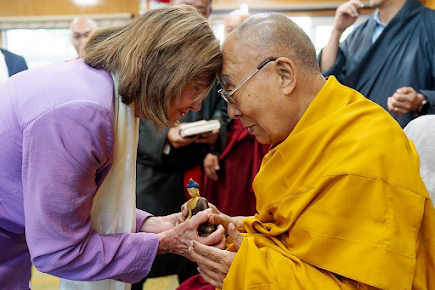
The Chinese dragon turns into a frenzy when other countries talk about Tibet or Tibetan identity and religion; and it breathes fire when anyone refers to the Dalai Lama, the spiritual leader of Tibetans. The recently passed US House of Representatives bipartisan bill that questions China’s control over Tibet seems to have achieved both the reactions. ‘The Promoting a Resolution to the Tibet-China Dispute Act’ is awaiting President Baiden’s signature. The Resolve Tibet Act, as it is referred to in short, seeks to promote a dialogue between the Chinese government and the Dalai Lama. It also empowers State Department officials to actively and directly counter ‘disinformation’ about Tibet from the Chinese government and reject false claims that Tibet has been part of China since “ancient times.” It pushes for negotiations without preconditions between the Chinese government and the Dalai Lama’s representatives. To add to China’s agony, close on the heels of the passing of the Resolve Tibet Act, a bipartisan US congressional delegation, led by House Foreign Affairs Committee chairman Michael Mc Caulis visited Dharamsala, the seat of Tibetan government in exile and met with Tibetan representatives. The delegates also called upon the Dalai Lama. Mc Caulis presented the Dalai Lama with a framed copy of The Resolve Tibet Act. Tibetans gave a public felicitation to the delegates after their meeting with the Dalai Lama. Former speaker Nancy Pelosi, member of the delegation addressing the gathering said “this bill is a message to the Chinese government that we have clarity in our thinking and our understanding of this issue of the freedom of Tibet.” After Pelosi said the Dalai Lama “with his message of compassion…and love, will live a long time and his legacy will live forever”, she fired a broadside at Chinese President Xi Jinping. She said “you will be gone and nobody will give you credit for anything.” The US delegation went on to New Delhi to meet with Prime Minister Narendra Modi. A few days ago, the Dalai Lama, aged 88, flew into New York to a warm welcome by hundreds of Tibetans. The Buddhist leader, visiting the US after 17 years, will be undergoing treatment for his knees. It is not clear whether the spiritual leader will meet any US officials during his visit. The US delegation’s visit to Dharamsala and meeting with the Dalai Lama and their promotion of the Resolve Tibet Act has drawn global attention to the Tibetan issue, which was almost forgotten. The publicity surrounding the Dalai Lama’s trip to the US has further infuriated Beijing. China minced no words in condemning the US Act and asked President Joe Biden not to sign it. Chinese foreign ministry spokesman Lin Jian told reporters “Any one or any force who attempts to destabilise Xizang (China’s official name for Tibet) to contain or suppress China will not succeed.” He called it a sovereignty issue and added “The US should not sign the bill. China will take resolute measures to defend its sovereignty, security and development interests.” Lin said Xizang was now enjoying a tranquil and harmonious society, positive economic growth and has opened up new grounds for long term stability and high-quality development. The American move on Tibet is making China highly uncomfortable. Is America trying to resurrect the Tibet autonomy issue as part of the Grey Warfare brewing for some time to cut down President Xi’s efforts to create a Sino-centric world order? It took the PRC three decades to bring Tibet under its full control. At the height of the Cold War, between 1950 and 1972 the Central Intelligence Agency (CIA) in close cooperation with the Departments of State (DoS) and Defense (DoD), conducted a comprehensive covert action campaign in support of Tibetan resistance movements fighting against Communist Chinese occupation of their homeland. The campaign’s stated goal was “to keep the political concept of an autonomous Tibet alive within Tibet and among several foreign nations.” Its similarity to the objective of The Resolve Tibet Act must be making China nervous. During the covert action, the CIA strengthened various isolated Tibetan groups to fight against the Chinese. It trained and raised a paramilitary force of 2000 Tibetans in the border areas of Nepal. During this period, the Dalai Lama and some 80 supporters fled to India on March 31,1959. India welcomed the spiritual leader and his supporters and offered them a home in Dharamsala. Since then, his presence across the border of Tibet acts as a beacon for Tibetans, who are slowly losing their culture and identity under Han hegemony. During the period of CIA intervention, some 87,000 Tibetans and 2,000 Chinese troops were killed. Over 100,000 Tibetans fled as refugees to India, Nepal, and Bhutan during the conflict. Revival of the Tibetan issue by the US will revive the bitter memories of the war of liberation, probably hidden from the younger generation of Tibetans. Tibetan government in exile estimates 1.2 million Tibetans -representing one fifth of the population - died due to China’s policies. Over 6000 monasteries, temples and historic buildings were destroyed. Thousands were arrested and suffered in prisons and labour camps. Another estimate suggests that more than 456,000 Tibetans were annihilated in the active conflict period between 1956 and 1962. In August 2020, President Xi in a speech said it is “necessary to actively guide Tibetan Buddhism to adapt to the socialist society and promote Sinicization of Tibetan Buddhism. In July 2021, Xi visited Tibet for the 70th anniversary of Tibet’s peaceful liberation. He emphasized the need to Sinicize Tibetan Buddhism and strengthen Tibetans’ identification with China and its culture. Sinicization of Tibetan Buddhism is an oxymoron as without Tibetan identity, language and culture the religion will not exist. Already, young Tibetans in China are losing touch with Tibetan language and culture as Tibet is swamped by Hans. Any foreign intervention could jeopardise Xi’s Sinicization plans. Since Xi Jinping came to power in 2012, China’s focus on Tibet’s border security and infrastructure has intensified. In particular, the infrastructure development of border areas with India has been taken up in a big way, perhaps to buttress his claims to Arunachal Pradesh, which China identifies as South Tibet. This includes the construction of 624 border defence villages. In the 14th Five Year Plan (2021-25), China has allocated 190 billion Yuan (about $29.3 billion) for infrastructure development in border regions. This includes civil and military infrastructure, roads, railways, expressways and airports. Already tightening of the border security measures has seen a drop in the number of Tibetans crossing the border as refugees, from 753 Tibetans in 2011 to five in 2022. China is unlikely to respond to the revival of any talks with the Dalai Lama and his representatives. Nine rounds of dialogues were held between them from 2002 to 2010. They did not yield concrete results. China insists on talking to the Dalai Lama’s representatives and not the representatives of the Tibetan government in exile based in Dharamsala. China also wants the Dalai Lama to “fundamentally reflect on and thoroughly correct his political views.” The Dalai Lama is not in good health and there is talk of choosing his successor in the air. The Chinese are likely to stall any American pressure to resume talks, till they choose a successor to the Dalai Lama. The CIA’s Tibet intervention ended in 1972 when POTUS Nixon wanted to recast US relations with China. The Dalai Lama in his 1991 autobiography Freedom in Exile has criticized the CIA for supporting the Tibetan independence movement not because they (the CIA) cared about Tibetan independence, but as part of their worldwide efforts to destabilize all communist governments. Given this background, the Tibet issue has the potential to become a talking point in the American presidential election debates in the next few months. The US is locked in the Ukraine conflict and in the South China Sea confrontation with China. It may not find the time and energy to revive the Tibetan intervention except as a potential threat to further unnerve the Chinese. John Kenneth Knaus, one of the CIA operatives who participated in the Tibetan resistance to fight China, aptly titled his memoir Orphans of the Cold War in sympathy for the plight of Tibetans. They have not only lost their independence, but also are in danger of losing their identity. India is in a unique position as any threat of American intervention can serve as an incentive for China to build better relations with India.Can India which has given refuge to the Dalai Lama and thousands of Tibetan refugees do more? I hope our political leadership ponders over this and factor it in India’s China policy. Col R Hariharan is a retired MI specialist on South Asia and Indian Ocean Region. He is associated with the Chennai Centre for Chin Studies. E-mail haridirect@gmail.com Website https://col.hariharan.info
Tuesday, 18 June 2024
Modi 3.0: Q & A on India-China relations relating to Sri Lanka
Col R Hariharan

China’s People’s Liberation Army Navy (PLA-N) hospital ship “Peace Ark” set sail on Mission Harmony 2024 to visit three countries including Sri Lanka. The Peace Ark will provide free diagnosis and treatment to local residents, people serving in Chinese institutions and overseas Chinese through onboard clinics and medical teams. Sri Lanka had imposed a ban on foreign research ships visit to Sri Lanka for one year after India objected to the visit of Chinese research ships to Sri Lanka for security reasons. In this context, my answers to questions raised by a Sri Lankan scribe on the subject are given below.
Q1: India
had strongly protested on security grounds against Chinese research ships
coming to Sri Lanka, even making port of calls. [Perhaps in deference to
India’s sensitivity on the issue,] Sri Lanka has banned the entry of foreign
vessels in Sri Lankan waters for research purposes for one year. [In this
context] How do you see the Indian security concerns? Do you see them as real
threats to India’s national security?
We
need to find answers to your questions on India’s security concerns on
increasing visit of China’s “research” vessels in the strategic dynamics of
Indian Ocean Region (IOR). It also has a context in the larger confrontation in
the Indo-Pacific.
We
should also remember the Indo-Sri Lanka relations becoming closer than ever
before Prime Minister Narendra Modi’s SAGAR initiative. During Modi 3.0, we can
expect India’s desire to play a pivotal role in the IOR to be increasingly
challenged by China. Maldives under Muizzu is a case in point.
In
this backdrop, we shall answer the question. China under Xi Jinping is trying
to create a New World Order (NWO) where China, rather than the West, will call
the shots. India also seeks a NWO – not a China centric one – but equitable to
global south. So there is some convergence between India and China in their
world view.
However,
China’s reluctance to resolve the border dispute with India is likely to
continue. This will impede the natural growth of friendly relations between the
giant neighbours. India cannot wish away China’s increasing presence under the
Belt and Road Initiative among all its South Asian neighbours. So, India will
factor China strengthening its presence on its periphery in its security
mapping. In the coming months, we can expect Sri Lanka by virtue of its
geostrategic location as a vanguard of India’s ocean security, to come under
the special attention of both India and China.
Q2:
Though Sri Lanka has banned Chinese research ships, Maldives has agreed to
entertain them. This means Chinese research ships are going to continue to
remain in Indian Ocean. How does it lessen the threat for India?
India’s
foreign policy dynamics, like Sri Lanka’s, are region and country specific. There
is no point in comparing how India handles Chinese intrusions in its vicinity
in Maldives and Sri Lanka. For example, Sri Lanka handles 70 percent of India’s
container traffic, while Maldives does not. India-Sri Lanka trade relations are
growing very fast. We can expect Maldives’ pro-China posture also to swing in
favour of India.
Q3:
Political leaders in Sri Lanka say China just wants to irritate India by
sending the research ships for port calls in Sri Lanka. To what extent does
this claim make sense?
China
has the largest number of research ships. They survey the behaviour of sea and
seabed as well as under water currents, which help both surface and submarine
operations. The research ship’s radars keep track of India’s missile tests and
presumably collect data useful for electronic warfare. They can collect data on
fisheries and under water mineral resources in EEZ of other countries including
Sri Lanka. India cannot simply ignore their presence in India’s vicinity.
Though their visits are likely to continue to be an irritant in Indian Ocean
waters, their potential to compromise national security of others cannot be
underestimated.
Q4:
What is the long-term solution of this issue, in your view?
India
and its neighbours, particularly Sri Lanka, are likely to face more and more
intrusive operations by Chinese ships. Best way to handle them is to keep track
of their operations in IOR. Indian Navy and Coast Guard are doing it 24x7 and I
am sure the data is available to Sri Lanka Navy on a real time basis. That is
how illegal trafficking of arms/drugs/humans is monitored and detected by both
countries.
However,
political handling of such intrusions is little more tricky. I am sure Indian
political leadership understands the limitations of Sri Lanka’s leadership in
handling China, its biggest money lender. Of course, this is subject to
prevailing strategic situations because no two situations are the same.
Q5:
Any other comments on the issue?
I see
no great improvement in India-China relations in the near term. It will
continue to be subject to Xi’s overawing desire to create a Sino-centric NWO
and the West’s resistance to it. India will continue to take positions (on
issues) suited to its national interest.
Tuesday, 4 June 2024
Sri Lanka's Elusive Accountability

Col R Hariharan
Sri Lanka Perspectives May 2024 | South Asia
Security Trends June 2024 |https://www.security-risks.com/post/col-hariharan-s-sri-lanka-perspective-may-2024-elusive-accountability
Sri Lankans observe May 1 ‘the International Labour Day” as a
holiday. Political parties hold rallies, often as a show of strength. Three
decades ago, President Ranasinghe Premadasa was killed by a LTTE suicide
bomber, while addressing the United National Party (UNP)’s May Day rally. This
year as many as 19 rallies were held in Colombo. The presidential election
poised to be held in Sept-October added interest to the rallies. Notable among
them was the rally of the UNP addressed by President Ranil Wickremesinghe. The
large number of people who turned up at the rally probably cheered
Wickremesinghe, after the historic drubbing the UNP suffered in the last
parliamentary poll. Wickremesinghe also lost the election.
Sri Lanka also celebrates ‘Victory Day’ on May 18, the day LTTE separatists were defeated when their leader V Prabhakaran was killed. Tamil families observe it as Mullivaikal Day to mourn their kin who perished in thousands in the last stages of war. As has become the norm, in many places zealous policemen prevented families who had gathered to mourn their dead by offering Kanji to others. In contrast, Sri Lankans celebrated the Vesak festival on the full moon day with Dansala, sharing food and goodies with others. Vesak commemorates the birth, enlightenment (nirvana) and enlightenment (Parinirvana) of Buddha.
The month also saw the Amnesty International (AI) Secretary General Agnes Callamard visiting Sri Lanka. During her visit to Mullivaikal, she met with the bereaved families. At the end of her visit, Ms Callamard addressing a press conference made a fervent plea to the Sri Lanka authorities to meet their national and international obligations to find answers as to what happened to thousands of missing and forcibly disappeared people. She regretted the lack of political will by successive governments and called it a stain on Sri Lanka’s reputation and something every Sri Lankan should be concerned with. Entire families of LTTE men that had surrendered had disappeared. “That means young children and babies. I think the Sri Lankans need to ask where are the babies, where are the children?”
As the AI chief pointed out, Sri Lanka has the dubious distinction of having one of the highest number of disappearances in the world – 60,000 to 100,000. Forcible disappearance had started much before the last episode of Eelam War. The Human Rights Watch points out that since the 1970s, “tens of thousands of people have been ‘disappeared’ in Sri Lanka.” While the JVP and LTTE had contributed their share to the tally, HRW says “about 90 percent of them are believed to have been abducted by security forces.” It says the Sri Lanka government had acknowledged that between 1988 and 1990 alone around 27,000 people were forcibly disappeared. The disappeared not only included opposing armed groups but journalists and human rights defenders as well.
Across the Palk Strait, the month of May will be remembered for the assassination of former Prime Minister Rajiv Gandhi on May 21. He was killed by a LTTE suicide bomber while addressing a meeting near Chennai. As PM, Rajiv Gandhi was behind India’s active involvement in support of the Tamil minority in Sri Lanka. He was the architect of the India-Sri Lanka Agreement (ISLA) in July 1987. Though ISLA prioritises India’s strategic concerns, it led to Sri Lanka’s formal recognition of Tamil identity, language and habitations. Prabhakaran’s mindless killing of Rajiv Gandhi led to the alienation of India’s hands-on involvement in support of the Tamil cause. The LTTE felt its detrimental impact when it fought the last battles that led to its final defeat in May 2009. Fringe elements in Tamil Nadu politics continue to use pro-LTTE political rhetoric to boost their stake in politics. However, Sri Lanka Tamil separatism no longer figures in Tamil Nadu’s mainstream politics. The ban on LTTE activity continues in India. Both central and state authorities ruthlessly act upon any sign of LTTE revival in Indian soil.
Despite the limitations of ISLA, none can deny the Agreement led to 13th Amendment to Sri Lanka constitution paving the way for the creation of provincial councils with limited powers for autonomy. Touching upon ISLA’s shortcomings, Rajiv Gandhi said, “The Government of India believe that, despite some problems and delays, many of which were foreseen but unavoidable in the resolution of an issue of this magnitude and complexity, this Agreement [ISLA] represents the only way of safeguarding legitimate Tamil interests and ensuring a durable peace in Sri Lanka. Some have chosen to criticise the Agreement. None has shown a better way of meeting the legitimate aspirations of the Tamils in Sri Lanka, restoring peace in that country and of meeting our own security concern in the region. We have accepted a role which is difficult, but which is in our national interests to discharge. We shall not shrink our obligations and commitments. This is a national endeavour.”
It is a pity that successive governments in Colombo have failed to use the full implementation of the 13A as a tool for restoring ethnic amity. Instead, they have used the issue to whip up Sinhala Buddhist nationalism to gain political advantage. PM Narendra Modi extended wholehearted financial and material support when Sri Lanka went bankrupt in 2023. This has paved the way for the two countries to build a win-win relationship as never before. However, both PM Modi and External Affairs Minister Jaishankar have not forgotten India’s “obligations and commitments” to Sri Lanka Tamils noted by Rajiv Gandhi. Both have continued to remind Sri Lanka of its obligation to fully implement the 13A, on every occasion of India-Sri Lanka interaction.
Sri Lanka’s political scene continues to lack clarity on the presidential election. Tamil (including Tamils of Indian origin) and Muslim minority roughly form 25 percent of eligible voters. Their vote can make a difference between the winner and loser. In 2015, Mahinda Rajapaksa lost the presidential contest to Maithripala Sirisena, when Tamils and Muslims overwhelmingly voted against him and in favour of Sirisena.
Among the mainstream political leaders Wickremesinghe probably enjoys a better equation with Tamil and Muslim minorities. Wickremesinghe seems to be working on a plan to win over Tamil support. His initiatives on devolution of powers had a poor start as Tamil polity has not been able to come upon a common agenda. In democracies, this is only to be expected. This is where parliamentary initiatives are needed; unfortunately, Sri Lanka parliament has been overwhelmed by existential issues. Paying attention to an “untouchable” issue like devolution of powers to Tamils is not on their priority.
President Wickremesinghe has had some success in restoring land rights of Tamils. On May 24, he attended a function held to distribute 1286 freehold land deeds to people across Jaffna district. Under the “Urumaya” programme, 13,858 freehold land deeds are set to be distributed in Mullaitivu, Kilinochchi, Vavuniya and Mannar districts of the Northern Province.
Though President Wickremesinghe is serving in the interim capacity, he has come up with a few controversial enactments. The Economic Transformation Bill is one such effort. It sets ambitious targets for the country’s economy for the next two and a half decades. The Bill provides for a National Policy on Economic Transformation and for the establishment of the Economic Commission, Investment Zones Sri Lanka, Office for International Trade, National Productivity Commission, and Sri Lanka Institute of Economics and International Trade. Though the Bill seeks radical changes, it has not been circulated to elicit public opinion. It has the potential to upset Wickremesinghe’s presidential ambitions.
The ruling Sri Lanka Podujana Peramuna (SLPP) has not yet made up its mind on its presidential candidate, though President Wickremesinghe is probably hopeful of winning its support. The opposition Samagi Jana Balawegaya (SJB), which broke away from Ranil’s United National Party (UNP) will probably again field its leader Sajith Premadasa. However, its leader General Sarath Fonseka has announced his intention to contest as an independent. Ranil Wickreme singhe can be hopeful of gaining support from the SJB ranks due to old loyalties. The leftist National People's Power (NPP) will field the JVP leader AK Dissanayake. Smaller parties like the Jathika Nidahas Peramuna (JNP), Pivithuru Hela Urumaya (PHU), Mawbima Janatha Party (MJP) led by entrepreneur Dilith Jayaweera, the Democratic Left Front, the Communist Party and the Independent MP’s Forum have launched the new political movement ‘Sarvajana Balaya’ (SB). It is yet to make up its mind on the presidential election.
Unless Sri Lanka elects a president who is accountable to the people, it matters little to the people. We can only hope the newly elected president is better than the last one.
[Col R Hariharan, a retired MI specialist on South Asia and
terrorism, served as the head of intelligence of the Indian Peace Keeping Force
in Sri Lanka 1987-90. He is associated with the Chennai Centre for China
Studies. Email: haridirect@gmail.com, Website: https://col.hariharan.info]